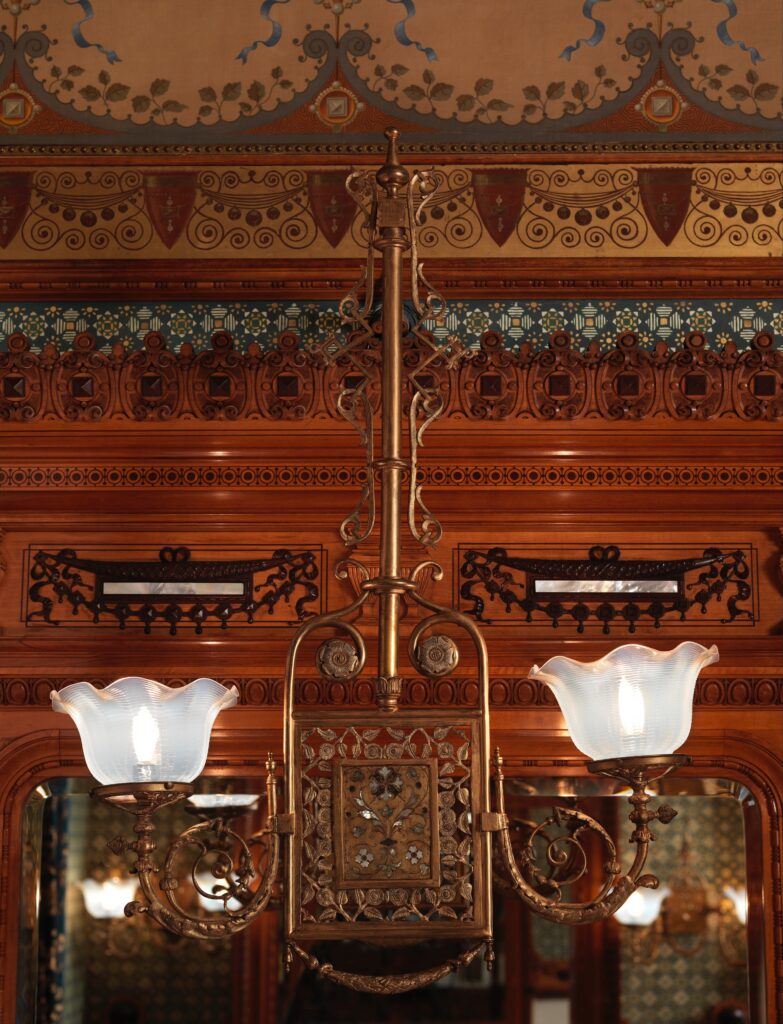
Some material combinations survive every change in fashion, and the reason is usually that all the components age in the same direction. Brass, oak and linen is the clearest example in the English interior.
Brass
Unlacquered brass oxidises to a warm brown, faster where it is handled. A door handle develops a bright patch exactly where the hand falls, which is a record of use that no finish can imitate.
Lacquered brass avoids this and pays for it later, because the lacquer eventually fails unevenly and the result cannot be corrected without stripping.
Oak
Oak darkens and warms over decades, and quarter-sawn oak shows the medullary rays as a figure that catches light differently as you move. It is hard, it dents rather than splinters, and it takes wax well.
Its one vice is that it reacts with iron in the presence of moisture and stains blue-black, which is why old oak sometimes has dark halos around nails.
Linen
Linen is stronger wet than dry, softens with every wash, and creases in a way that has to be accepted rather than managed. Undyed, it shifts slowly from greyish to warm ivory.
It is the one textile that looks better after ten years of use than it did new, provided nobody attempts to keep it crisp.
Why they agree
All three move toward warmth, all three record handling, and none of them can be convincingly faked. A room built from them starts unremarkable and improves without intervention.
The opposite palette, chrome, veneered board and synthetic weave, starts at its best on the day it is installed. That is the whole distinction.