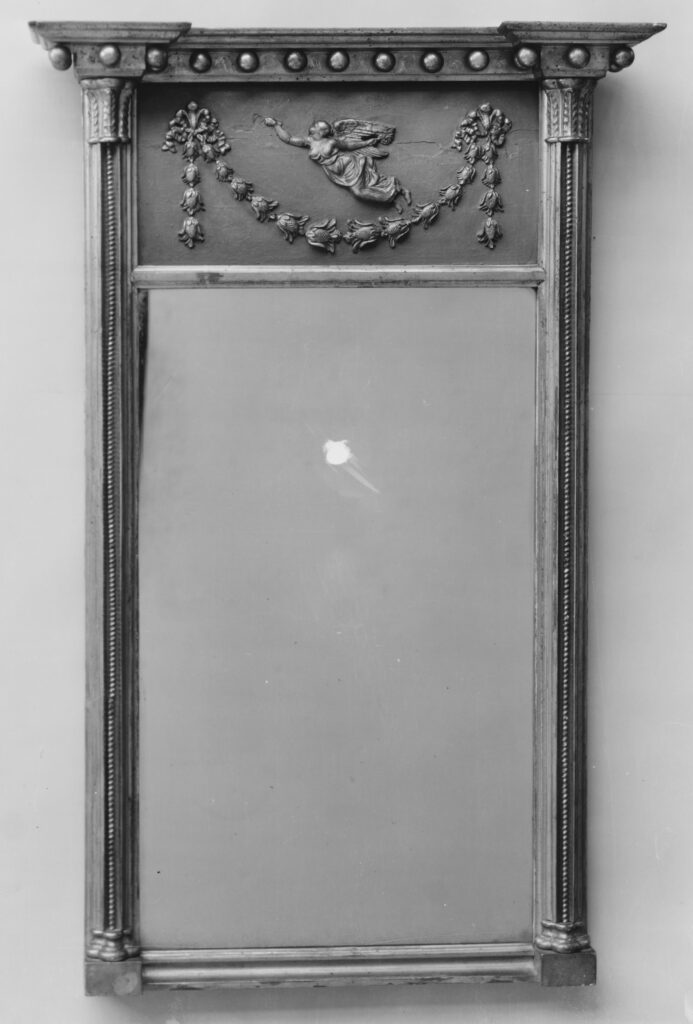
An old room photograph rarely records only the room. A coat over a chair, a newspaper on a table or the edge of a doorway may sit in the frame because the photographer was looking at someone else.
That makes the image useful and incomplete. It fixes one angle at one moment, but it cannot tell us by itself who used the room, why objects were placed where they were, or whether the scene was ordinary. Reading it means keeping the visible detail separate from the story we build around it.
What photographs add to the record
People recorded rooms long before cameras. Household inventories list possessions and their value; plans show a layout; letters describe changes; paintings and drawings preserve selected views. Each answers a different question. An inventory can name a table without showing how it relates to a window. A painting can show an arrangement, but it also reflects the choices of the artist and the person who commissioned it.
Photography added a fixed view of a room, not a complete or neutral account. The camera still had a position, a frame and an operator. A formal photograph may have been carefully arranged; a family picture may catch the room incidentally. Both preserve details, and both show choices about what belonged in the image.
When cameras reached the home
Making photographs was once expensive and technically demanding. The George Eastman Museum’s account of the Kodak and Brownie cameras traces a change from Kodak’s 1888 camera, which brought photography to a much wider public, to the more affordable Brownie introduced in 1900, which made picture-taking a casually convenient part of daily life.
As cameras became easier to use, photographs could record family occasions as well as formal portraits. A room might be the intended subject, but it could also remain in the background of a birthday, a visit or a gathering at home. Those images preserve domestic details because the photographer had another reason to take the picture.
The formal view and the family snapshot
A deliberate interior photograph records the room and its presentation. Furniture may have been shifted, objects grouped or curtains adjusted before the camera was set. Those choices do not make the image less useful. They tell us how someone wanted the room to appear, as well as what it contained.
A family snapshot can preserve another kind of evidence. If the camera was aimed at a person, the room may enter the frame without being arranged as a display. A basket beside a chair, papers on a table or a lamp near the bed can remain in view. One photograph cannot establish that this was the room’s usual state, but it can show details that a planned view might have left out.
How to read a room inside the frame
Begin with the fixed elements: windows, doors, fireplaces and built-in cupboards. Then locate the larger pieces of furniture in relation to them. Which seats face one another? What is near the light or the hearth? A look at how Victorian rooms were arranged for living can help place those relationships in context.
Next, look for signs of use. A polished patch, a softened chair arm or a worn path across a rug may suggest where people returned often. These details are clues rather than dates. A single image cannot tell us how often a room was used or by whom.
Look beyond the main subject, too. Wallpaper, curtain fabric, door trim and the view through a window can help place the image. The camera’s angle can distort distance, and anything beyond the frame is simply missing. Use dated captions, family records or other photographs before assigning a year from a style or object alone; furniture could be inherited, second-hand or kept for decades.
Let the album supply context
Captions, dates and neighboring pictures can make a room photograph more legible. Compare images of the same space to see what changed and what remained. Patina’s comparison of one sitting room across forty years shows how two photographs can be read together without treating either as a complete account.
Printed sources can help identify objects in the background. An old furniture catalogue may offer a useful comparison for a chair or table, while the photograph supplies its setting. A match can narrow the possibilities; one visual resemblance alone cannot establish a maker or exact model.
The most revealing detail may be something the photographer did not set out to preserve. A room photograph can show what happened beside the main subject, provided each conclusion stays close to what is actually in the frame.