Some furniture is worth buying because it is beautiful. Some is worth buying because it will still be here in fifty years and will look better then than it does now. The second category is smaller, and it is mostly defined by how a piece is made rather than what it looks like.
Marble tops
A marble-topped console or washstand is one of the most reliable purchases in the second-hand market, because the top is usually the least damaged part and the most expensive to reproduce.
Check the underside rather than the surface. Original tops are thicker than modern replacements and the underside is left rough. A perfectly smooth, thin, even slab has usually been cut recently, which is not a fault but should be reflected in the price.
Stains are less alarming than they appear. Marble is porous and much of what looks like permanent damage is absorbed oil that can be drawn out slowly with a poultice. Cracks running fully through are the real problem, particularly around the corners where a top has been lifted badly.
Cane backs
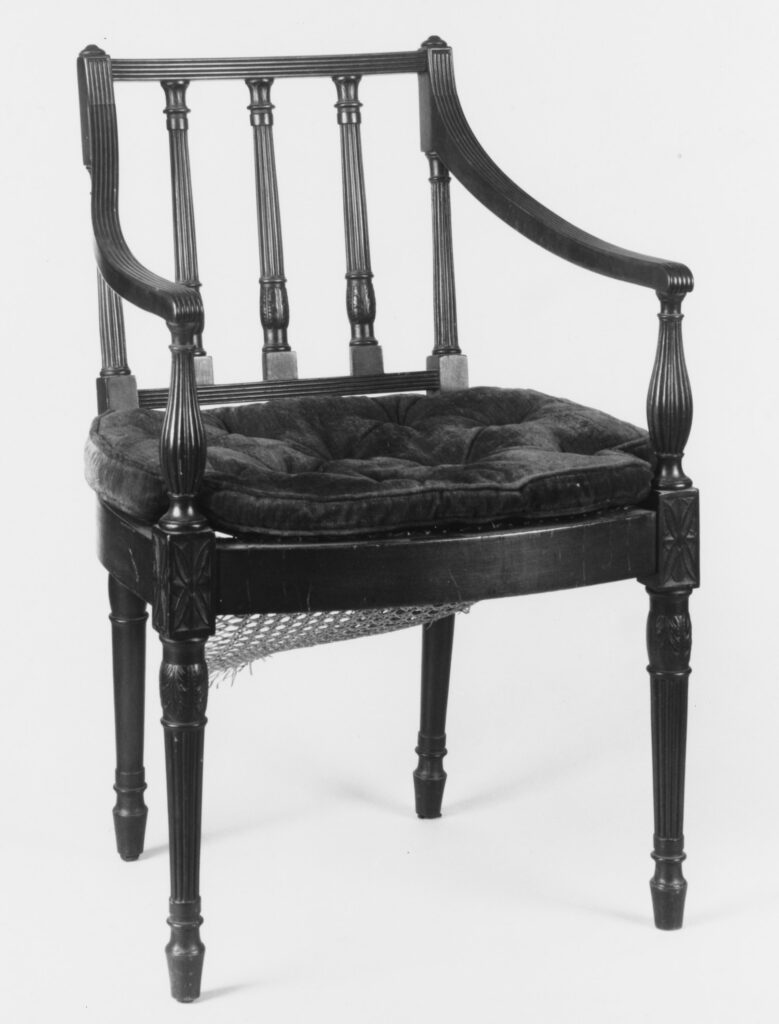
Hand-woven cane is the other thing worth looking for, and it is easy to tell from the machine-made alternative. Hand caning passes through a series of individual drilled holes around the frame. Machine-made sheet cane sits in a continuous groove, held with a reed spline.
Both can be replaced, but hand caning is a slow specialist job and priced accordingly, so a chair with intact original caning is worth paying for. Sheet cane is comparatively cheap to renew, which makes a chair with a blown panel a reasonable bargain rather than a write-off.
Cane that has gone brittle and pale has usually been dried out by sun or radiators. It will keep breaking. Cane that is still faintly flexible has life in it.
What these two have in common
Both are materials that were chosen because they solved a problem. Marble was used where water and heat were expected. Cane was used where weight and airflow mattered.
That is the general rule for pieces worth keeping. The materials were selected for performance, and the appearance followed. Furniture designed the other way round tends not to survive long enough to be second-hand.
Part of the Complete Guide Buying Vintage Furniture: A Complete Guide Read the full guide →