The French provincial interior is the most imitated and least understood of the vintage styles. French provincial style is usually sold as a palette, chalky white, soft grey, a little faded blue, and a handful of motifs. That version is easy to produce and almost always looks thin.
The real thing was never a style at all. It was what happened when rural houses were furnished from local workshops over two centuries, and its coherence comes from constraint rather than taste.
In furniture the word has a stricter meaning, set out in the French Provincial furniture guide, which also separates the regional originals from the American factory suites that borrowed the name. This page is about the rooms. The wider French tradition, Parisian apartments included, is in the complete guide to French vintage decor.
Built from what was to hand
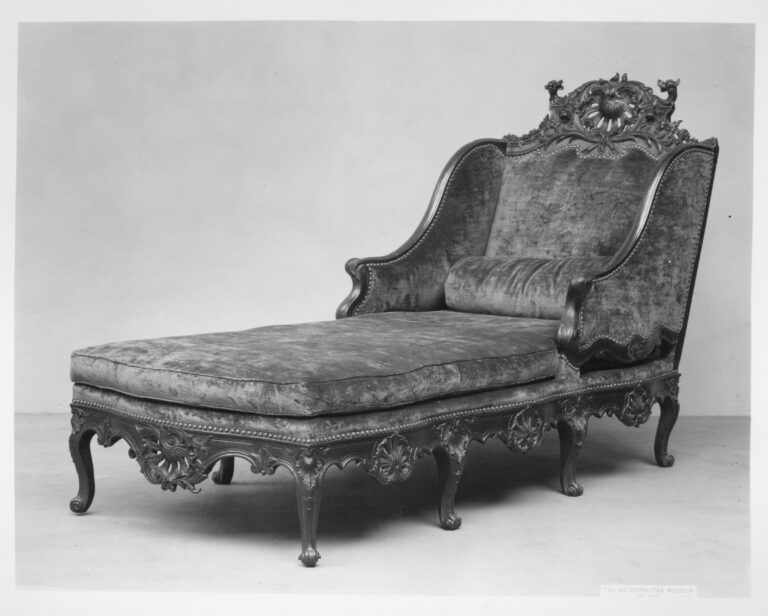
Provincial furniture was made by village menuisiers working in local timber. In the south that meant walnut, as in the carved walnut daybed the Met attributes to the school of Toulon, and olive, in the north oak and fruitwood, in Provence often a softer wood that was painted because it was not handsome enough to leave bare.
They were copying Parisian fashions at a distance and a delay, simplifying the carving and dropping the gilding. What survives is a kind of translated elegance, a shape that remembers a grander original but is built to be used in a farmhouse.
The palette is a material palette
The colours everyone copies are not paint choices. They are what the materials were.
The white is limewash, which is slightly translucent and changes through the day. The greys and blues are pigments softened by years of sun. The warm floor is terracotta made from local clay. The ochre is the render itself.
Reproduce those colours in flat modern emulsion and the room goes dead, because the depth was never in the hue. It was in the fact that the surface was uneven and slightly absorbent.
Furniture with a job
A small number of pieces do most of the work, and each of them was designed around a task. French provincial furniture has its own guide, including what the name does and does not mean.
- The armoire, tall and deep, because houses had no built-in storage.
- The buffet or enfilade, low and long, for storing and serving in the same room.
- The farm table, scrubbed rather than polished, long enough for a working household.
- Rush-seated ladder-back chairs, light, repairable and cheap to replace.
- The iron bedstead, which was hygienic, and could be moved by one person.
Buy the look without the logic and you end up with a decorative armoire in a house that already has fitted wardrobes, which is why so many of these rooms feel staged.
Provincial is not the same as country
The distinction matters if you are sourcing. French provincial describes regional interpretations of formal furniture, and it retains proportion and restraint. What is sold as French country is often a much softer, more decorated idea, heavier on floral pattern and distressed paint, and largely an invention of later revivals.
Neither is wrong, but mixing them without noticing is the fastest way to a room that reads as a reproduction of a reproduction.
Bringing French provincial style into a room
Keep the walls quiet and imperfect, and spend the money on the surface rather than the colour. Choose one large timber piece and let it be the oldest thing in the room. Keep textiles undyed or barely dyed, and wash them until they give up.
Then stop. The provincial room was assembled slowly by people who could not buy a whole scheme at once, and that slowness is visible in the result. It is the one part of the style that cannot be bought.