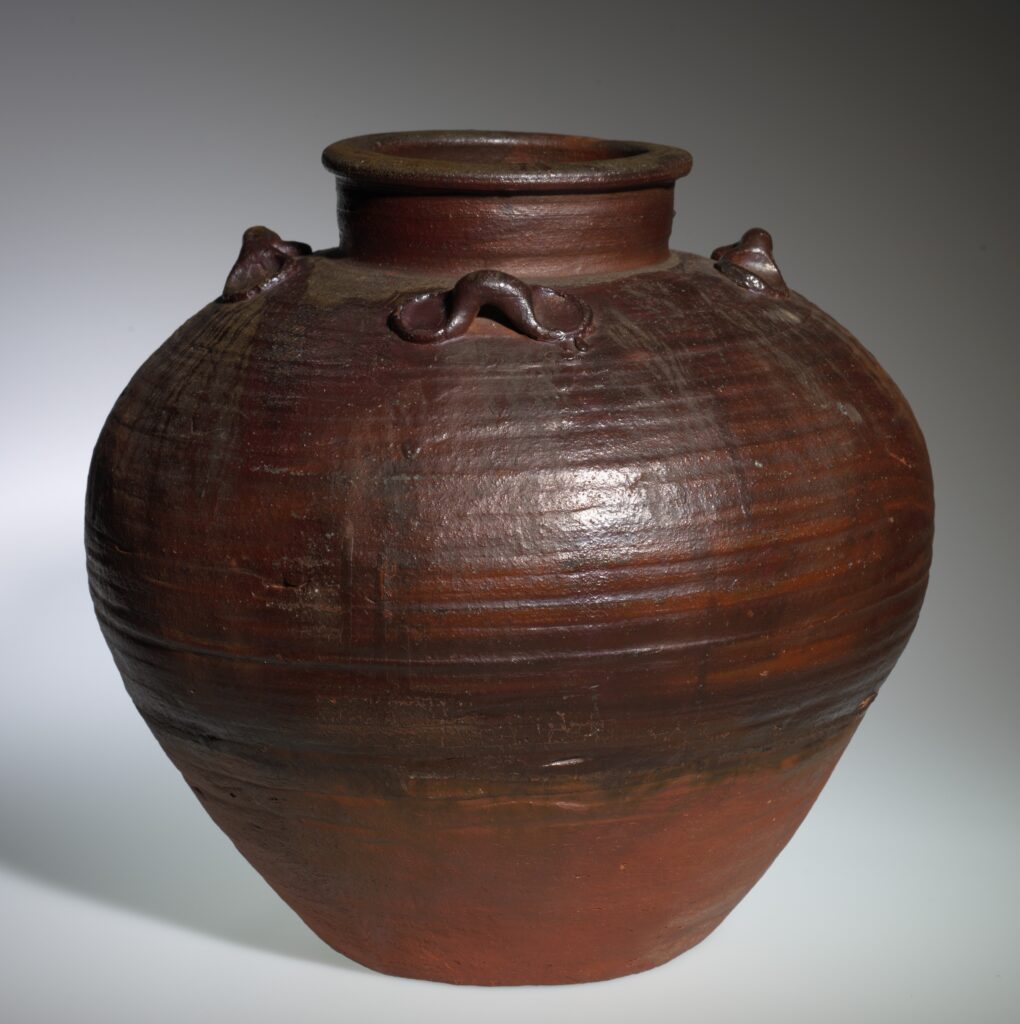
There is no painted decoration; the marks come from the firing. Four small lugs interrupt the shoulder of a dark Bizen jar in Cleveland. Below them, horizontal ridges circle a body 38.1 cm high. The museum dates this tea storage jar to about 1600 and identifies its surface as natural ash glaze with fire-mark decoration called hidasuki. 1
The useful distinction among Japanese pottery types is the ware tradition, rather than simply the vessel’s shape. Bizen and Shigaraki belong to the Six Ancient Kilns, alongside Tamba, Echizen, Seto and Tokoname. Hagi belongs in a wider account of Japanese stoneware, but outside that group. The seven objects range from large storage jars to smaller tea vessels. 2,9
For the porcelain branch, including Arita and Imari, see our guide to antique Japanese porcelain. Here the examples are stoneware: storage jars, a tea caddy and a bowl whose individual records make the regional names less abstract.
Japanese pottery types compared through seven objects
A pale bowl and a brown storage jar can both be stoneware. Their records combine regional names with descriptions of the clay and glaze.
| Ware | Detail to examine on this example | Museum example |
|---|---|---|
| Bizen | Shoulder lugs and horizontal ridges; natural ash glaze and fire marks | Cleveland tea storage jar, about 1600, 1976.110 |
| Shigaraki | Incised shoulder band and uneven ash deposits | Cleveland storage jar, late 1300s–1400s, 1973.18 |
| Tamba (Tanba) | Narrow mouth, flaring rim and visible coil construction | Met large storage jar, second half of the 14th century, 1975.268.427 |
| Echizen | Distorted body and uneven ash coverage, discussed in the record | Met storage jar, 12th century, 1977.261 |
| Seto (Ko-Seto) | Natural ash glaze; small cylindrical body with a dark, streaked surface | Met tea caddy, late 16th century, 29.100.646 |
| Tokoname | Broad body, open mouth and flowing natural ash glaze | Cleveland storage jar, late 1100s, 2015.495 |
| Hagi | Pale slip-covered bowl and its separately documented notched foot | Smithsonian tea bowl, late 17th century, F1898.21 |
These observations describe the seven museum objects, not a color chart for assigning every unidentified pot to a kiln. The six older traditions produced high-fired stoneware; QAGOMA’s account explains how wood ash settling during firing could melt into a glaze on the vessel. 2
Bizen: a jar with a surface worth slowing down for
The short neck and flared lip sit above a broad, rounded body. Small changes in the brown surface become easier to notice because there is so little ornament competing with them. Cleveland’s jar measures 37.5 cm across, almost its height. Its broad proportions belong to a substantial storage vessel. 1
Its record names Bizen ware, dates it to about 1600 and identifies both natural ash glaze and hidasuki decoration.
The appreciation of such surfaces has a wider place in Japanese aesthetics, explored in our article on wabi-sabi.
Shigaraki: the shoulder band comes before the broken rim
An incised band circles the shoulder of Cleveland’s Shigaraki storage jar. Above it, the short rim is damaged; below, pale deposits break across the rounded brown body. The jar is 45.7 cm high and dates to the late 1300s–1400s. 3
The museum relates the incised design to cypress fences and identifies the surface as natural ash glaze. It also explains the reddish color through iron in the clay. Those are separate clues: decoration cut into the vessel, the body beneath it, and ash that settled during firing.
The rim originally had a complete, slightly flared lip. The jar was intended for grain storage, though vessels of this kind also attracted tea enthusiasts. Its history runs from grain storage to tea appreciation. 3

Tamba and Echizen: two jars, two different records
The Met’s Tamba jar rises toward a narrow mouth with a sharply flaring rim. Uneven horizontal contours remain visible on its brown body. Dated to the second half of the 14th century, it stands 42.9 cm high. The record uses the spelling Tanba; Tamba is another rendering of the same ware name. 4
Its construction matters here. The museum identifies visible coils and associates this narrow-mouthed group with the Inariyama kiln in the Tanba region. It also notes the resemblance of early Tanba production to Tokoname. The resemblance places the two traditions in the same historical discussion. 4
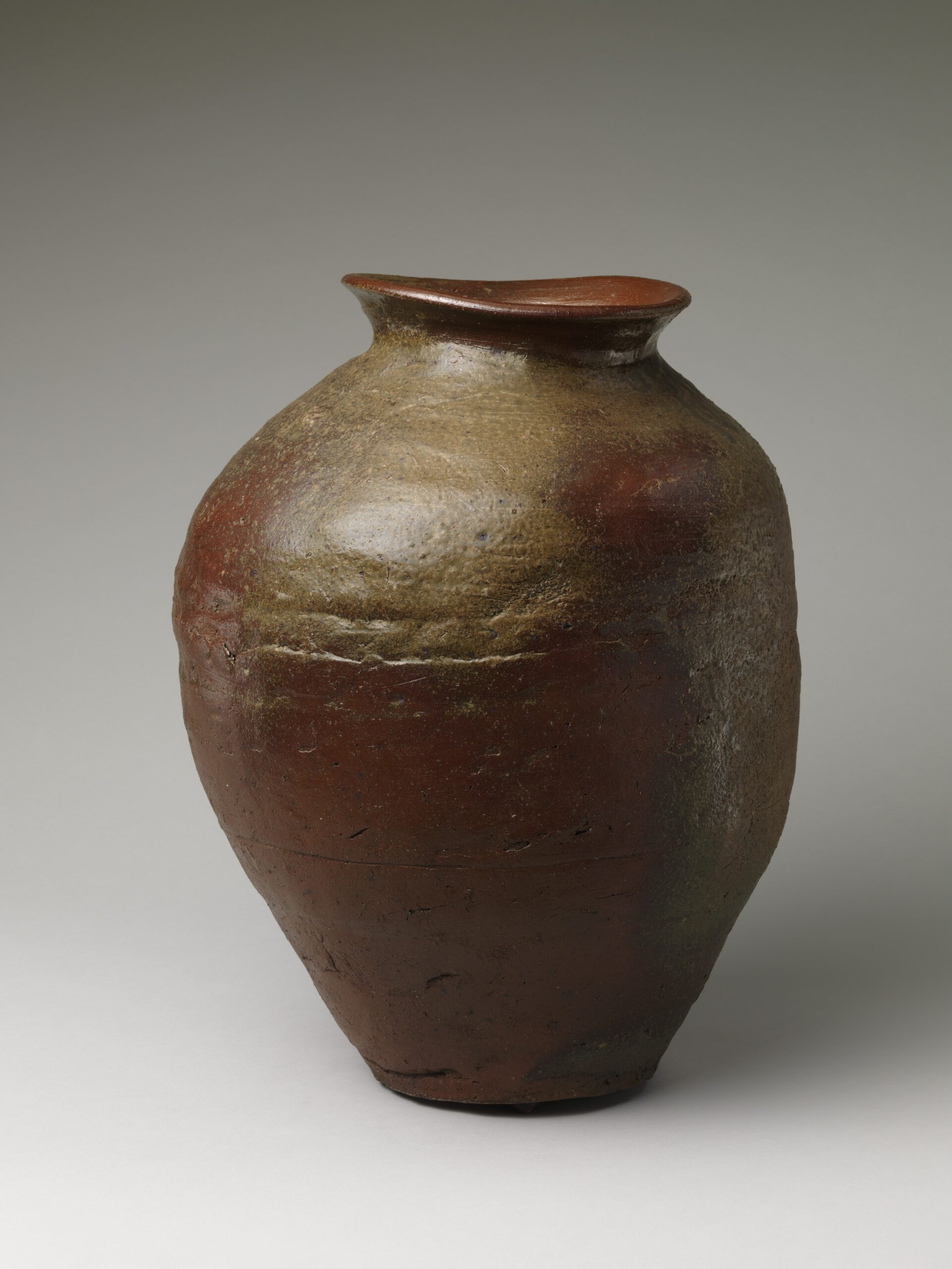
The 12th-century Echizen jar in the Met’s collection has a distorted body and uneven ash coverage. It measures 36.5 cm high and 38.7 cm in diameter. The museum proposes that it may have toppled during firing; fused kiln debris and the direction of ash flows help its reconstruction. 5
Seto and Tokoname: check the scale before the silhouette
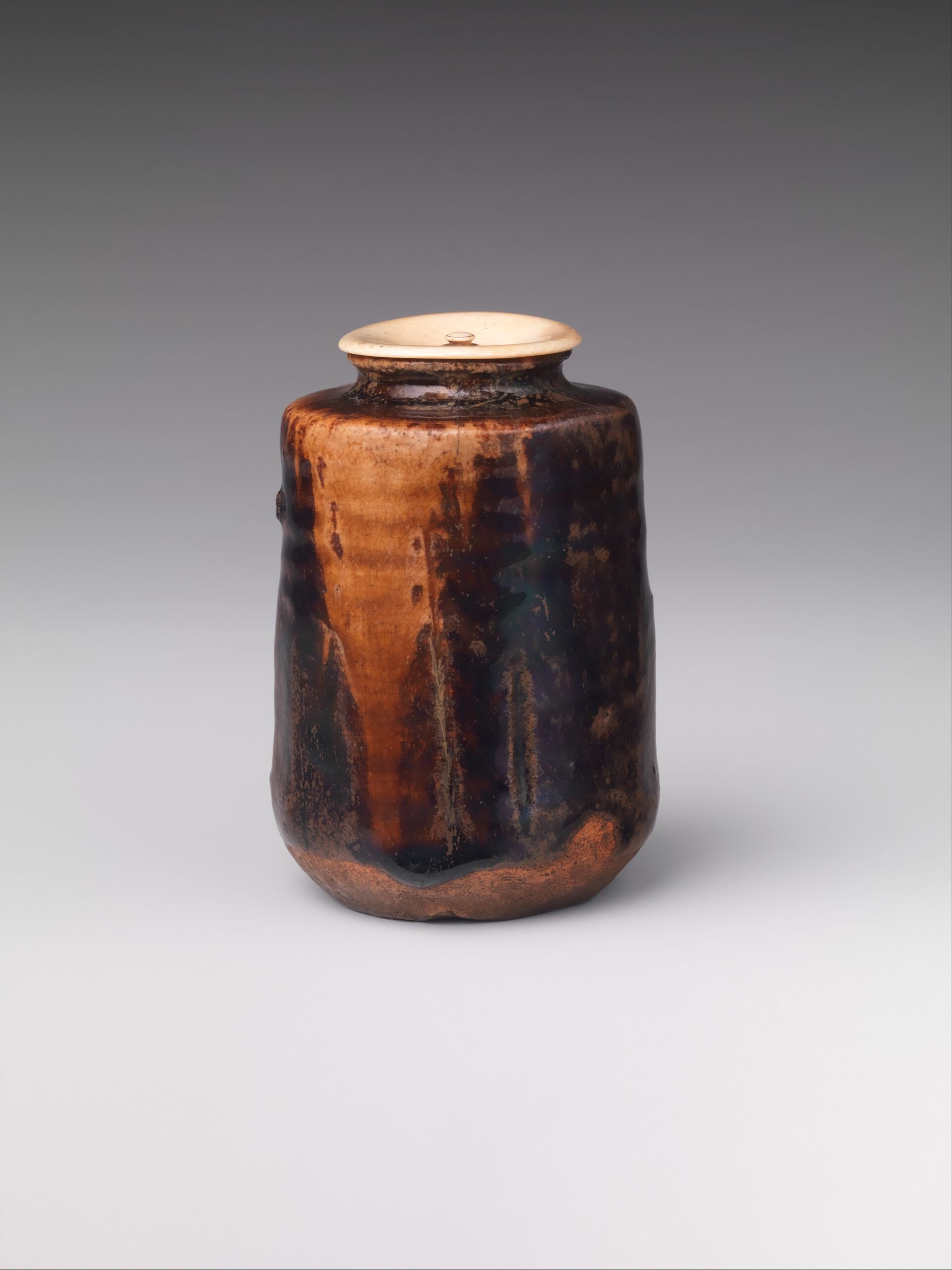
The pale lid on the Met’s Seto tea caddy sits over a small cylindrical body streaked with amber brown and dark glaze. At 9.2 cm high, the late-16th-century caddy would be dwarfed by the storage jars around it. The record identifies Ko-Seto ware and describes stoneware with natural ash glaze. 6
On this caddy, the Met identifies natural ash glaze. QAGOMA explains how wood ash could settle on pots and melt during firing; its Seto jar of 1582 is catalogued as wheel-thrown stoneware with kiln and ash marks. 2,6,10
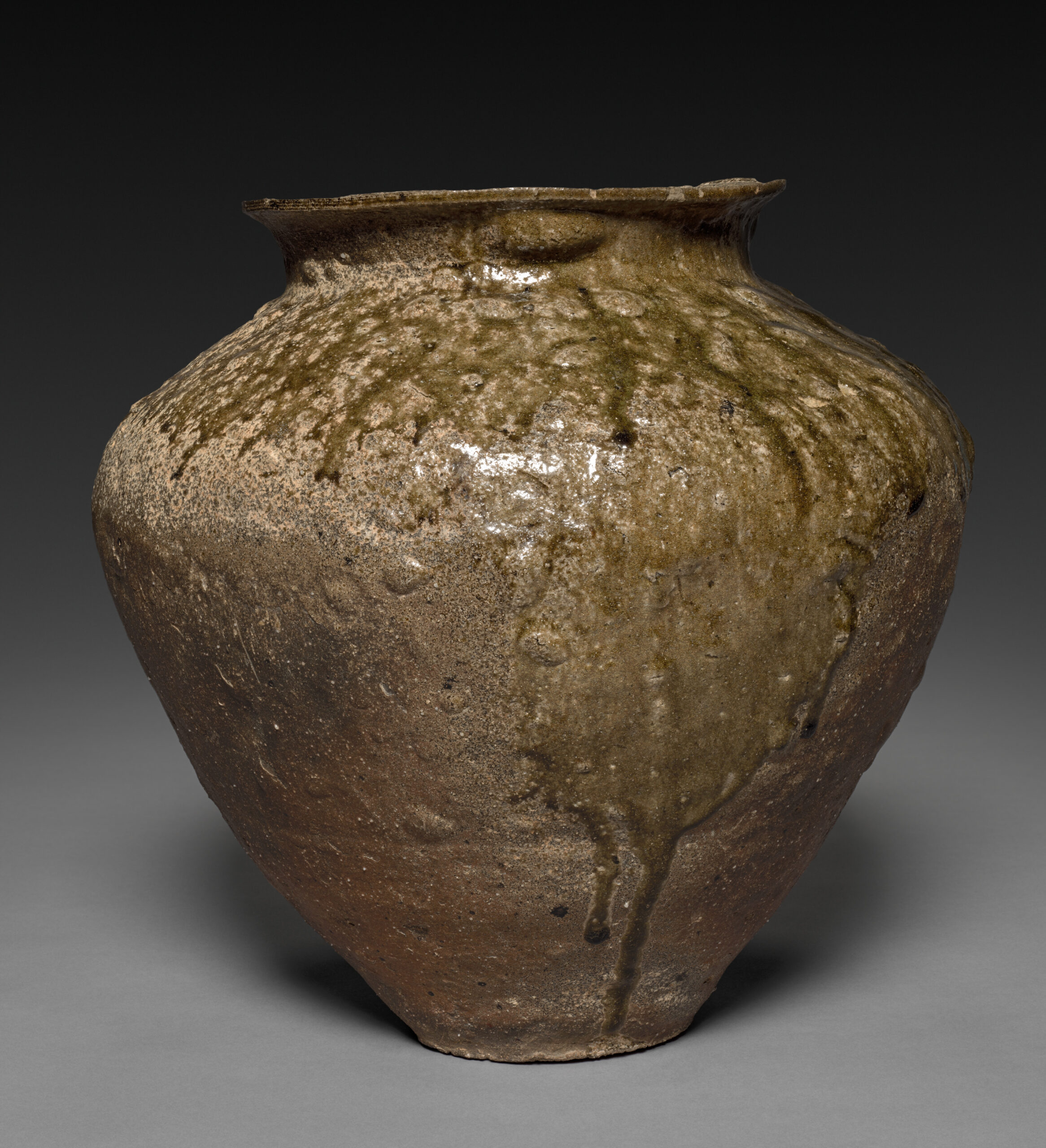
The broad Tokoname jar at Cleveland has a much more open mouth. Glossy olive-brown flows cross a rougher surface beneath its uneven, flaring rim. It dates to the late 1100s and is 37 cm high, with a slightly greater diameter of 38.2 cm. 7
Cleveland places Tokoname on Ise Bay in Aichi and describes it as the largest medieval pottery production center. It calls wide-mouthed jars of this kind kame and notes their later appeal in tea practice. This is a useful corrective to a view of Tokoname limited to small teapots: the dated object is a large storage jar. 7
Hagi: a pale tea bowl, outside the six
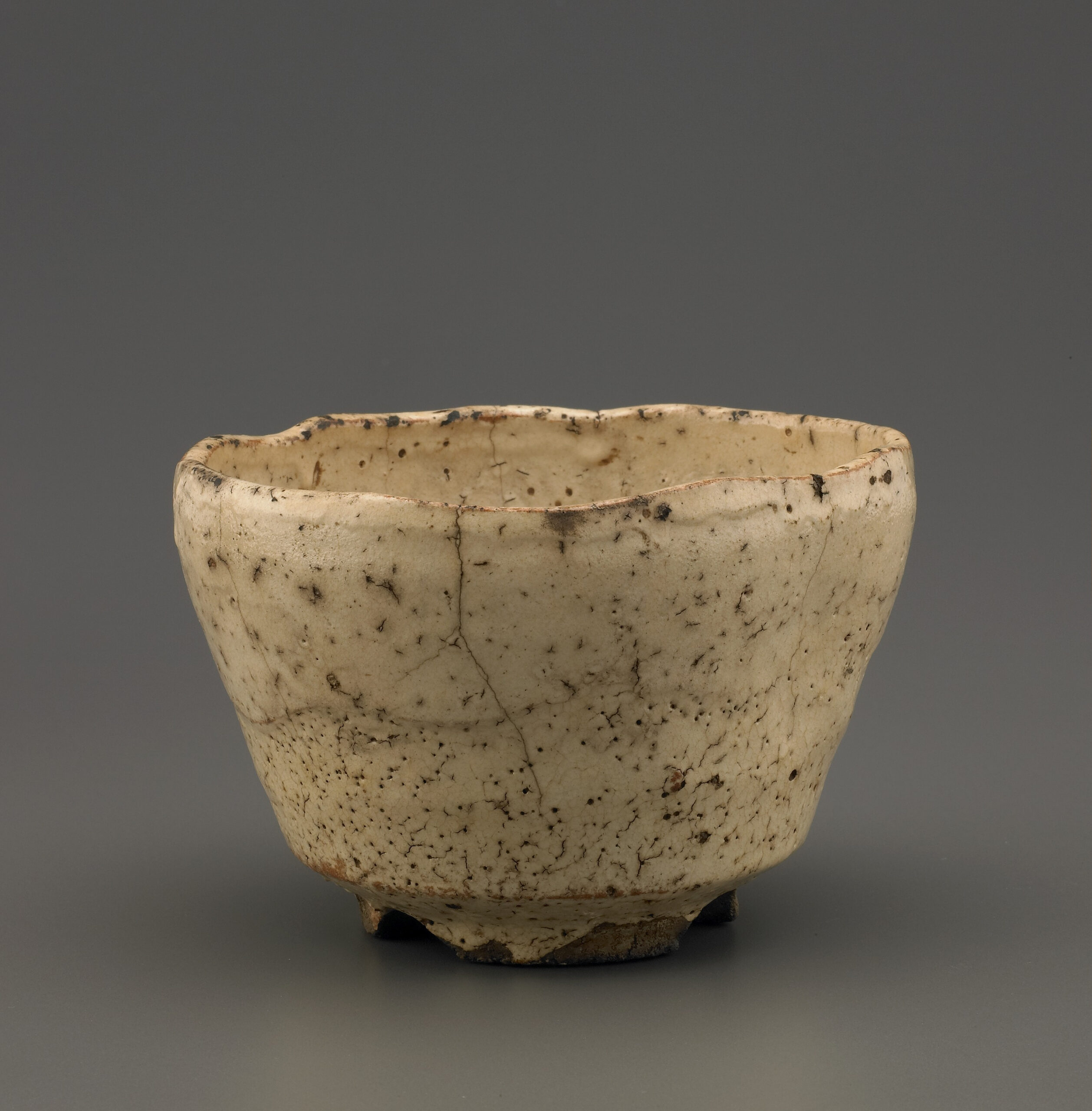
A low foot supports the Smithsonian bowl’s uneven cream-colored body. Dark speckles interrupt the pale surface. The museum dates it to the late 17th century and records stoneware with white slip under a wood-ash glaze. It is 8.9 cm high and 13.6 cm in diameter. Hagi is stoneware in this record, not porcelain. 8
The title, Tea bowl with notched foot, names a feature that this front view does not show clearly. The accompanying label connects the notched foot with Korean tea bowls and discusses the rim as a design innovation. The underside belongs in an identification photograph too. 8
Hagi’s history belongs outside the medieval Six Ancient Kilns grouping. The Hagi Uragami Museum’s account describes official kilns established under the Mōri clan in the early 1600s and the subsequent development of tea wares. It also explains Hagi clay mixtures and ash glazes. Pale glaze alone is insufficient for an attribution: the museum notes that white glazes were used elsewhere in western Japan too. 9
For the vocabulary of tea-bowl forms and use, see chawan. Here, the important distinction is between Hagi, a ware tradition, and a tea bowl, an object form.
Questions about the kiln names
What are Japan’s Six Ancient Kilns?
Bizen, Shigaraki, Tamba, Echizen, Seto and Tokoname. QAGOMA’s museum account discusses the group as six old kiln traditions producing high-fired stoneware. These six form one historical group within Japan’s wider ceramic traditions. 2
Is Hagi ware porcelain?
The Smithsonian bowl illustrated here is catalogued as stoneware with white slip under wood-ash glaze. Its pale surface is not evidence of a porcelain body. The Hagi Uragami Museum’s account explains the local clay mixtures and glaze traditions behind the ware. 8,9
Does natural ash glaze mean a pot was glazed before firing?
No. Wood ash can settle on a vessel during firing and melt into a glazed surface. The photographed Bizen, Shigaraki and Tokoname jars are all catalogued with natural ash glaze. For an individual object, retain the museum’s material description rather than replacing it with “unglazed” because most of the body looks dry. 1,2,3,7
Sources
1. Cleveland Museum of Art, Tea Storage Jar, Bizen ware, about 1600, 1976.110.
2. QAGOMA, Six Old Kilns, 2024.
3. Cleveland Museum of Art, Storage Jar, Shigaraki ware, late 1300s–1400s, 1973.18.
5. The Metropolitan Museum of Art, Storage Jar (Tsubo), Echizen ware, 12th century, 1977.261.
6. The Metropolitan Museum of Art, Tea Caddy (Chaire), Ko-Seto ware, late 16th century, 29.100.646.
7. Cleveland Museum of Art, Storage Jar, Tokoname ware, late 1100s, 2015.495.
10. QAGOMA, Narrow-necked jar with lugs (tsubo), Seto kilns, Katō Goemon, 1582, 1995.085.