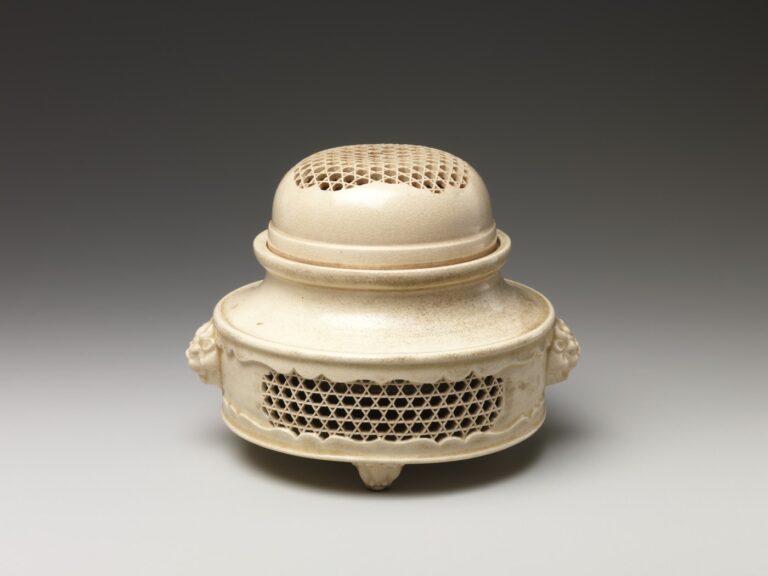
Antique Japanese porcelain begins in the early seventeenth century, several hundred years after the first Chinese porcelain, and most of the pieces collectors look for were made in the Edo period (1615–1868). The center of production was the Arita district of Hizen province on the island of Kyushu. The names you meet most often, Imari, Kakiemon, Nabeshima and Kutani, point to a port, a potter, a type and a village. They are not four kinds of clay.
This guide gives the outline: what the material is, where it came from, how the main looks differ and what to ask before you buy. Every piece shown comes from the Metropolitan Museum of Art, and the kiln label under each picture is the museum’s own wording.
What counts as antique Japanese porcelain, and when it began
Porcelain is fired at very high temperatures so that it becomes strong and vitrified. Stoneware is also high-fired but can be made from many clays, while porcelain is made from a specific mixture that includes kaolin, a soft white clay. Its smooth, semi-translucent surface suits fine painting.
Korean potters living in Japan pioneered the industry. Many arrived during Toyotomi Hideyoshi’s invasions of Korea in the 1590s, and a lord took some of them to Hizen, where they revived Karatsu stoneware and introduced the climbing kiln, the noborigama. In the early seventeenth century the Korean potters in the Arita district found clay suitable for porcelain. Britannica gives a traditional date: manufacture is said to begin in 1616, when Korean craftsmen under the master potter Ri Sampei found porcelain clay at Arita.
Arita, Hizen and the kilns: why Imari is a port
The Met’s essay explains that “Imari” names a port near the Arita kilns, from which the wares were shipped. Britannica describes Imari ware as porcelain made at the Arita kilns in Hizen province, in white, celadon, black and blue-and-white wares with underglaze painting, as well as overglaze enamels. The Saga fief protected the industry under a strict monopoly.
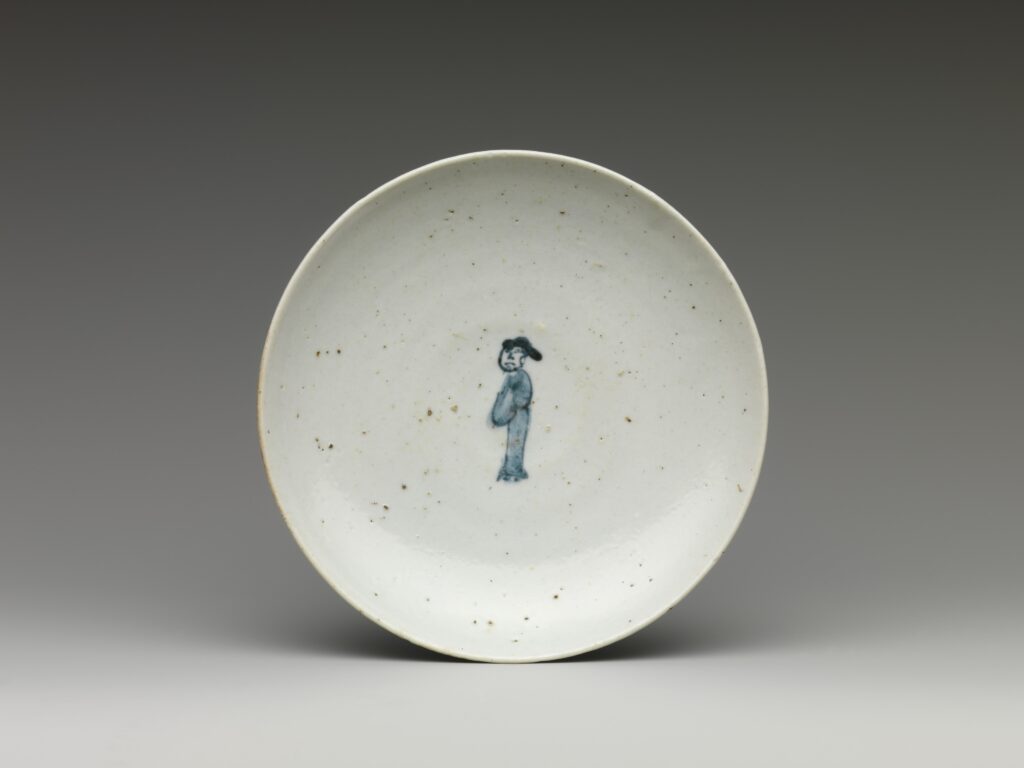
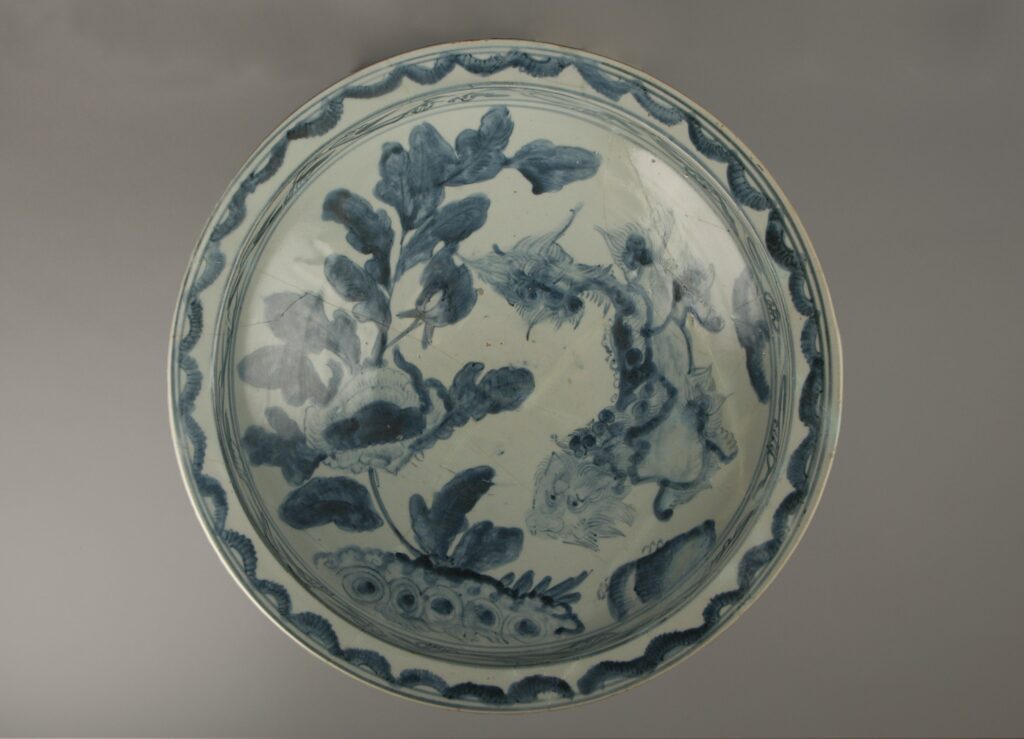
The first Japanese porcelain is known as early Imari: designs painted in cobalt blue on a white ground under a transparent glaze, on a body with a coarse, grainy texture and a free, fluid hand. The Met suggests the look suited the tea ceremony’s taste for a rustic, simple appearance. For the tea bowls themselves, which the Met records as earthenware and stoneware rather than porcelain, see the guide to chawan. Museum records use two labels together: “Hizen ware” for the broad group and “Arita type” for pieces like the dishes shown here. The later enameled export wares, which most collectors mean by Imari, are the subject of the guide to Imari ware.
Early Imari, Kakiemon and Nabeshima: three looks
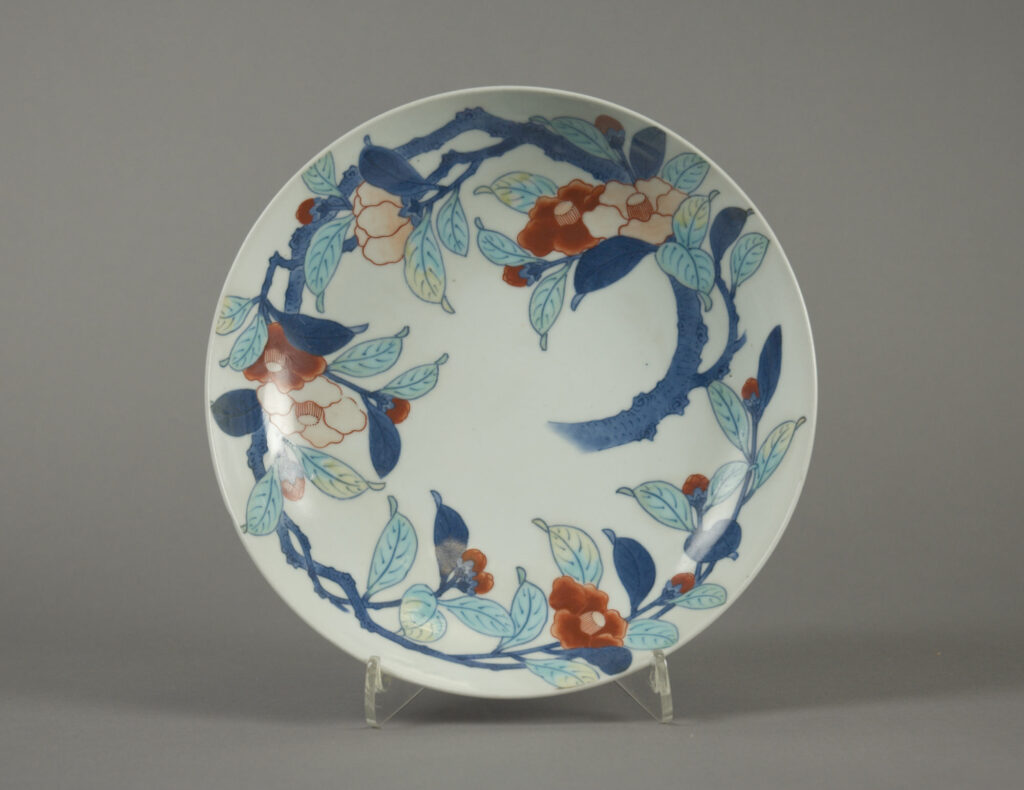
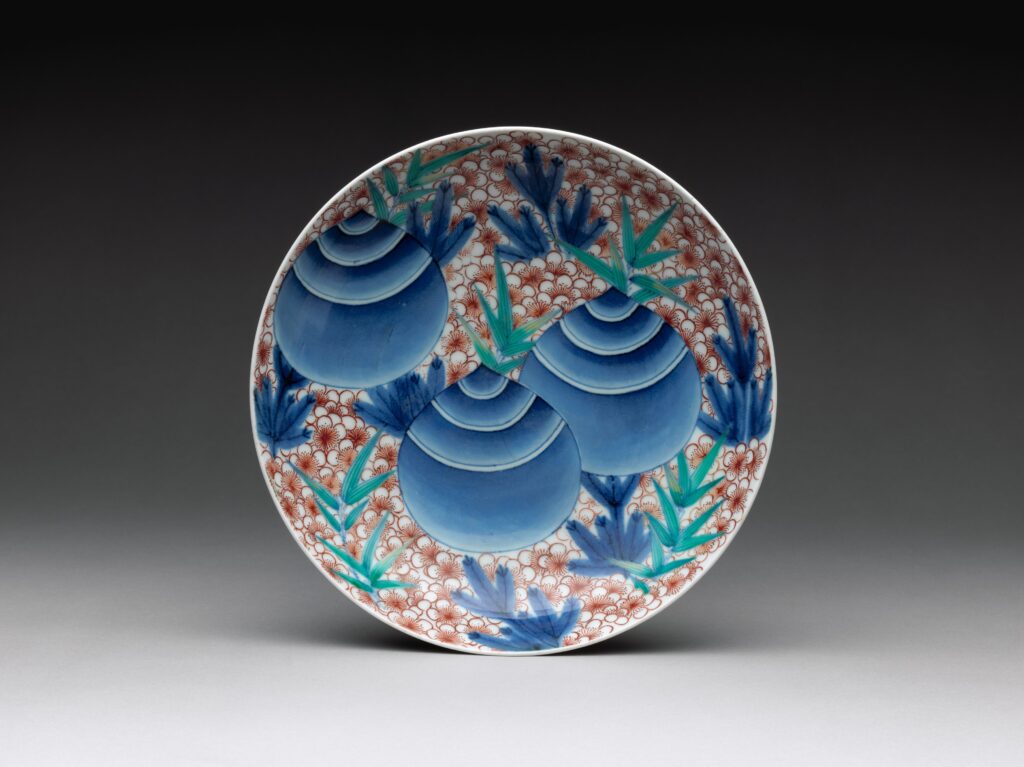
Early Imari is the underglaze-blue look described above. The Met also catalogues a bowl with cover, about 1675, under the name Kakiemon I: porcelain decorated in blue under the glaze and iron red. The two dishes below carry the museum’s label “Hizen ware, Nabeshima type,” and both pair blue under the glaze with colored enamels over it. They date from the late seventeenth to the early eighteenth century.
This guide stops at the labels. How to recognize a Kakiemon or Nabeshima piece in the hand is a subject for its own article.
Kutani and Satsuma: other regions, other bodies
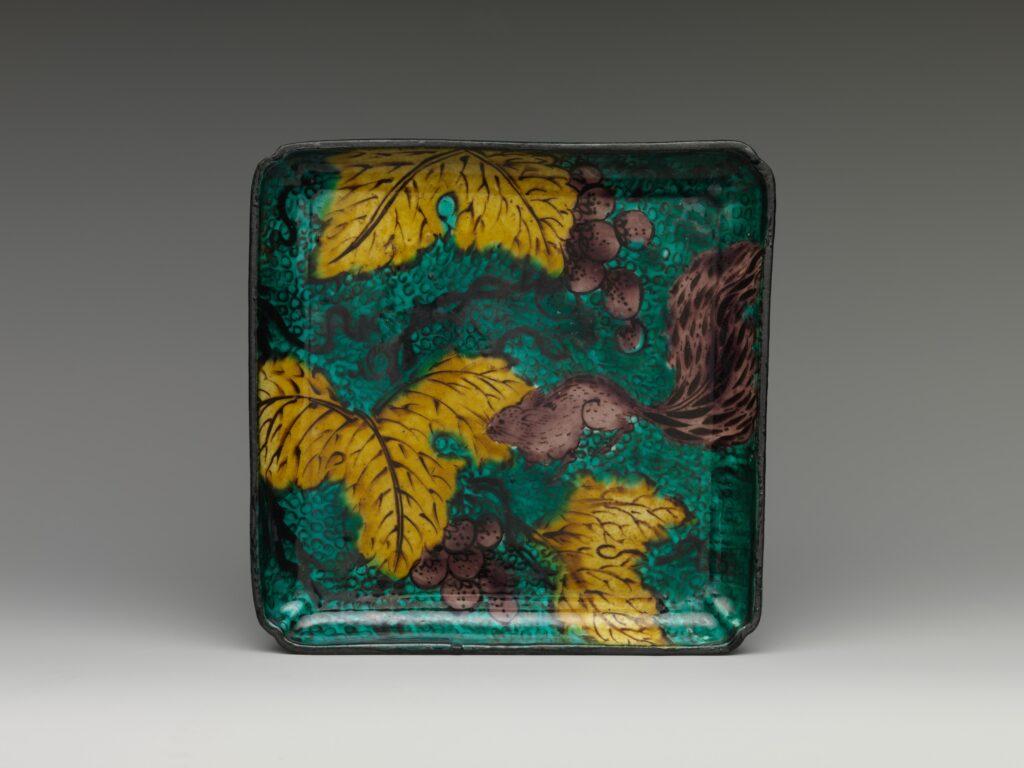
Britannica places Kutani ware in Kaga province, now Ishikawa prefecture, where the powerful Maeda family had a kiln by 1656. “Old Kutani” means porcelain with heavily applied overglaze enamels, in dark, restrained colors, and “Green Kutani” covers most of the surface in a green glaze. The Met labels the square plate below “Kutani type” and dates it to the first half of the nineteenth century.
Satsuma is a different case. The Met’s Satsuma records describe earthenware or pottery with a clear glaze: an eighteenth-century incense burner, a tea jar of about 1745 and an eighteenth-century teabowl. If a seller calls a piece Satsuma porcelain, ask what the description is based on.
Edo or Meiji: how the period changes the label
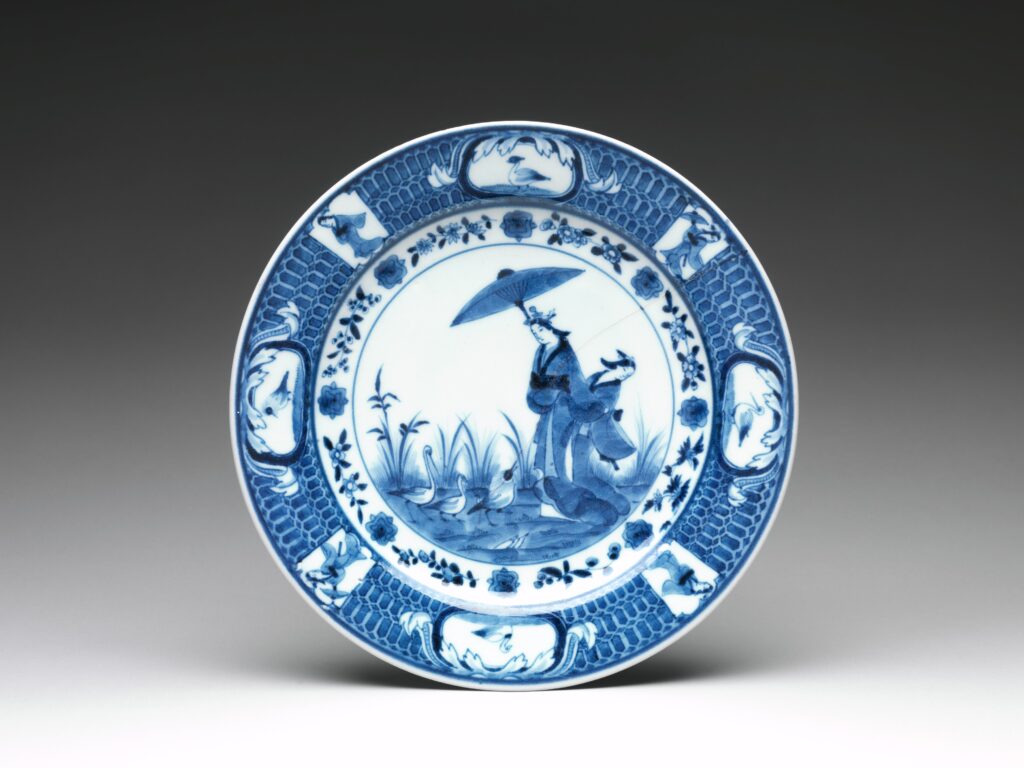
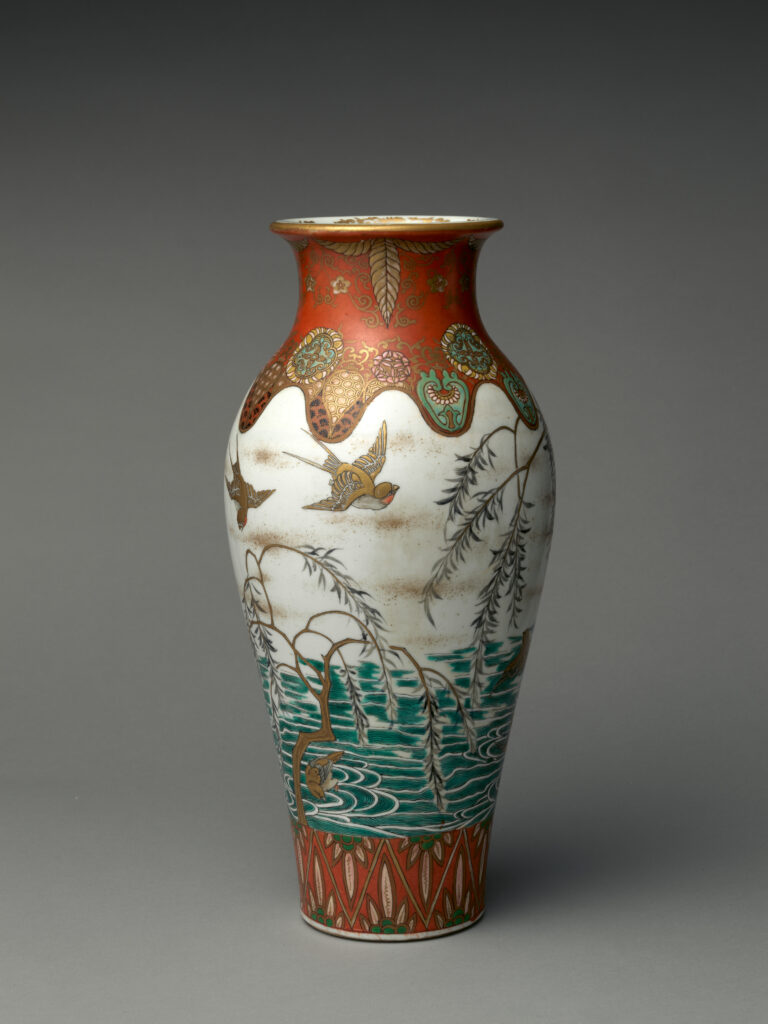
The Edo period runs from 1615 to 1868 and the Meiji period from 1868 to 1912. Most of the pieces above are Edo. The vase below is catalogued by the Met as Meiji, Kyoto ware, porcelain with overglaze enamels and gold, yet its date line reads “mid-19th century.” Period labels have soft edges, and museum records give dates as ranges: “ca. 1620–30s” for the small dish, “ca. 1735–40” for the featured plate.
Made for export or for Japan
In 1639 the shogun adopted a policy of national isolation, but the Dutch and Chinese were partly exempt. Dutch merchants kept residences on the island of Deshima near Nagasaki, and the Dutch encouraged the new Japanese industry to fill the gap left by China. That export porcelain is commonly called Arita ware. The Dutch sent wooden or earthenware models of designs they thought Europeans would like, and some pieces carry designs credited to the draughtsman Cornelis Pronk, like the featured plate. They also supplied European vessel shapes and Chinese underglaze-blue examples, such as kraak for plates.
Export was a habit of the whole industry, not only of porcelain: see how it shaped lacquer in the guide to Japanese furniture, and how Japanese art reached Western rooms in the story of Japonisme. The wider tradition is gathered in the Japanese section. For how Japanese rooms are put together, see the guide to Japanese interior design.
Marks, and what this guide leaves out
A mark is easy to photograph and hard to interpret, and none of the sources read for this guide gives a mark reference, so it does not offer one. Treat any mark as a clue to ask about, not as proof of date or maker.
Dating, condition and what to ask before you buy
Start with the questions the museum records answer for every piece:
- What is the body: porcelain, porcelaneous stoneware or earthenware? The Satsuma records show why it matters.
- How is it decorated: blue under the glaze, enamels over it, celadon glaze, gold?
- What label does the seller use, “Hizen ware,” “Arita type,” “Nabeshima type,” and on what basis?
- What date range is claimed, and is it an Edo or a Meiji range?
Condition and reproductions are outside what these sources cover. Ask for provenance and a written description, and compare the piece with the museum records listed below.
Common questions
Is Imari Japanese or Chinese? Japanese. It is porcelain from the Arita kilns in Hizen, named for the port of Imari from which it was shipped.
What is the difference between porcelain and stoneware? Both are high-fired, but porcelain is made from a specific clay mixture that includes kaolin, while stoneware can be made from many clays.
Is Satsuma ware porcelain? The Met’s Satsuma records describe earthenware or pottery with a clear glaze.
Sources
- Anna Willmann, “Edo-Period Japanese Porcelain,” Heilbrunn Timeline of Art History, The Metropolitan Museum of Art, 2011.
- Encyclopaedia Britannica, “Imari ware” and “Kutani ware.”
- Met object records (public domain, Open Access): 2002.447.123, 1975.268.495, 1975.268.471, 1975.268.508, 1975.268.560, 23.225.302, 1975.268.576, 91.1.279, 17.118.88a,b, 19.14.2a–c, 25.215.11a,b and 93.1.32.