A chawan is a Japanese tea bowl, and the Metropolitan Museum of Art uses the word in the titles of its bowls. Several of its bowls from the late sixteenth and early seventeenth centuries show how varied the form could be. This guide reads four of them, the museum’s own descriptions in hand, to show what separates a Raku chawan from a Mino one and what to ask when you meet a bowl for sale. They are earthenware and stoneware, not porcelain; the porcelain side of Japanese ceramics is in the guide to antique Japanese porcelain.
Raku chawan: molded by hand, not thrown
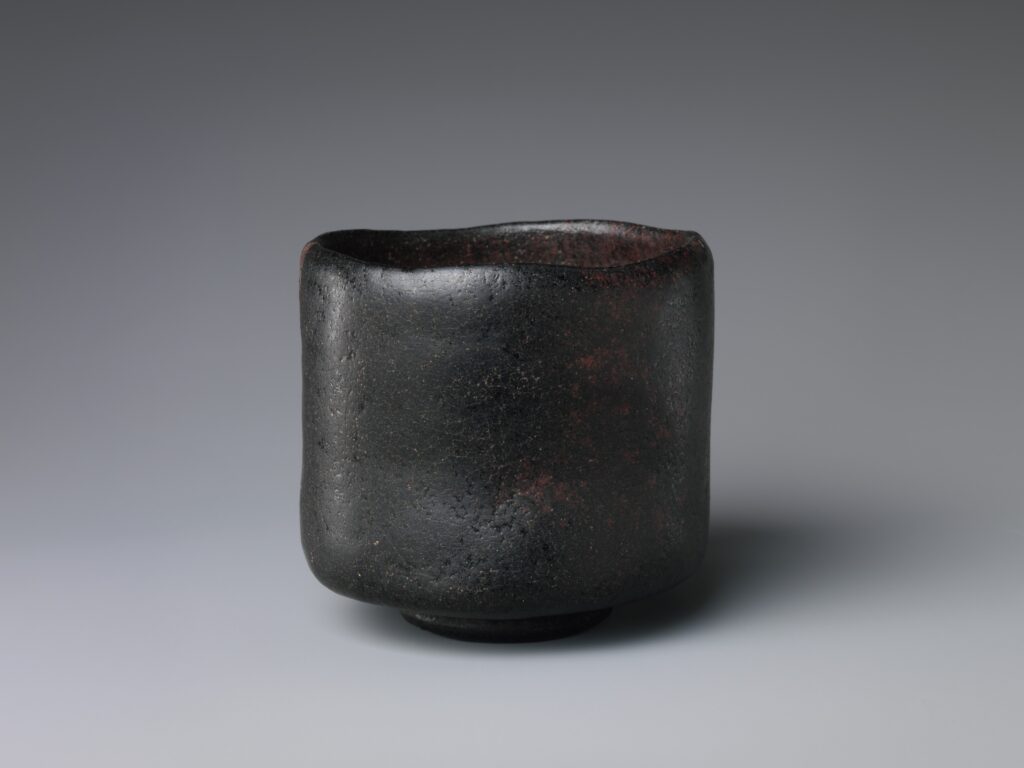
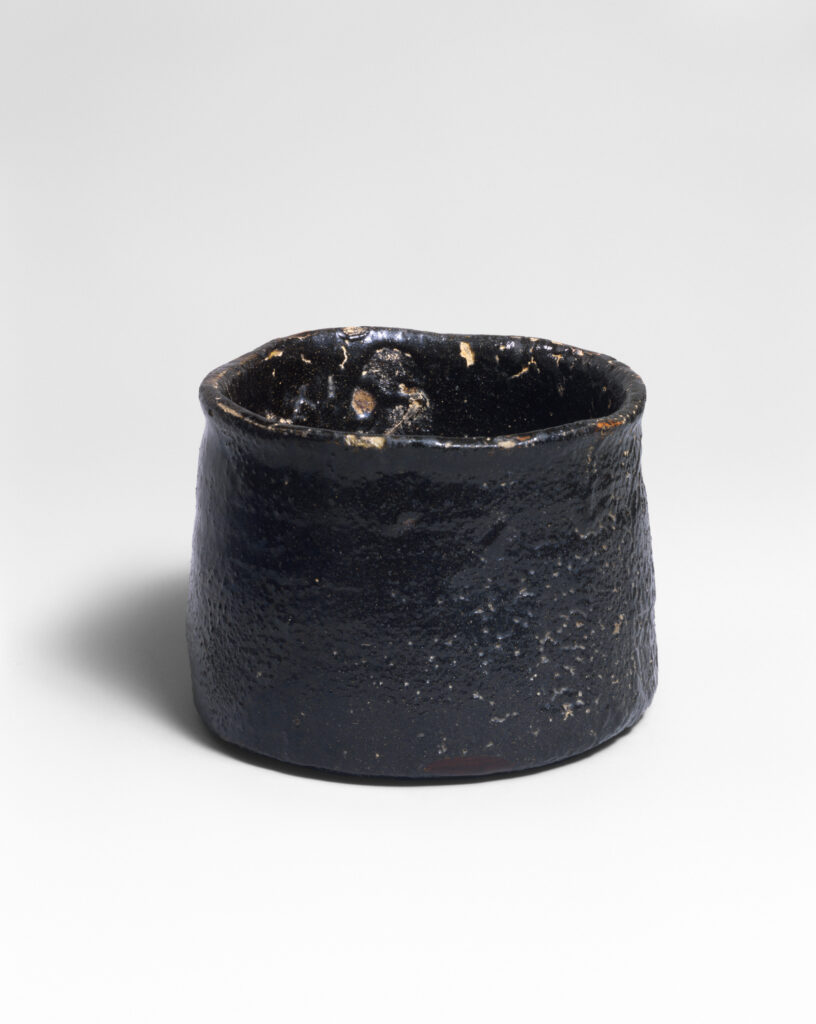
The Met describes Raku ware as a type of ceramic highly esteemed in the Japanese tea ceremony: a lightweight glazed earthenware molded by hand rather than thrown on a potter’s wheel, with a rough, unpretentious clay covered in an opaque glaze. Raku ware could be fired in small indoor kilns, which helped its popularity in Kyoto, a major tea center. The Raku family of potters traces its lineage to the time of the tea master Sen no Rikyū and still makes the ware today (Met 17.118.74).
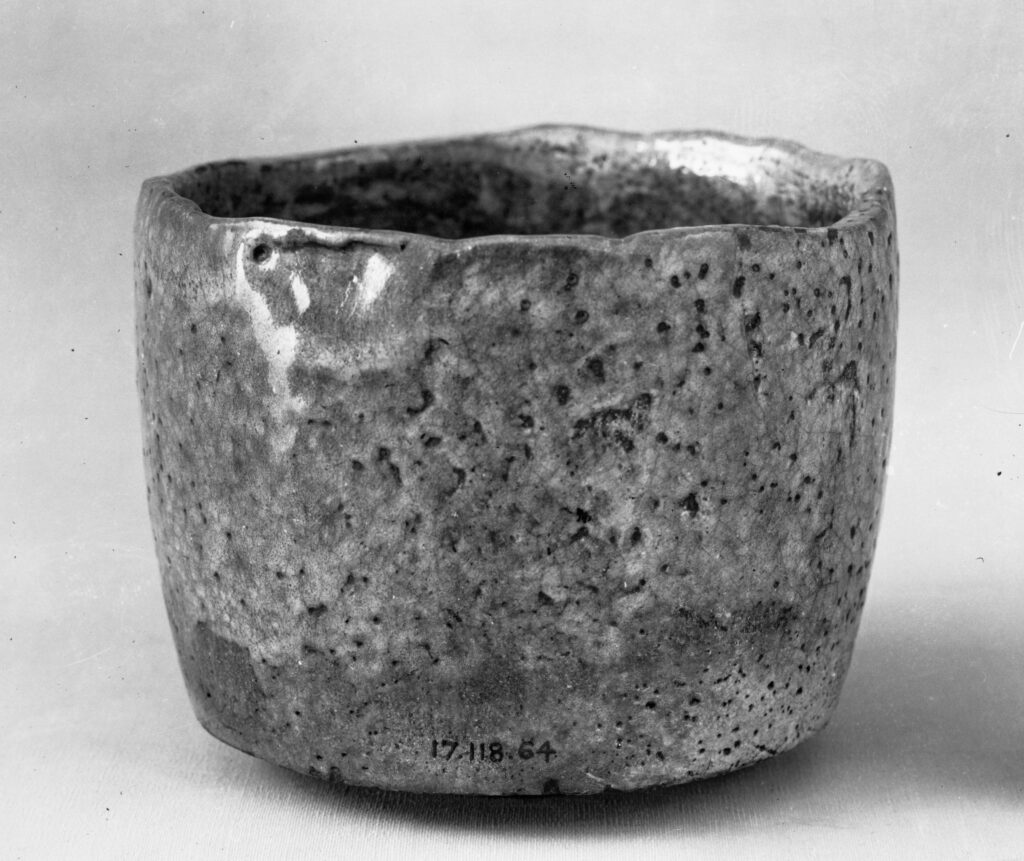
That bowl, a black Raku chawan of the early seventeenth century, is only 3⅝ inches high. The museum says it is tentatively attributed to Chōjirō, the sixteenth-century tile maker believed to be the founder of Raku ware, and records the legend that Rikyū himself stimulated and supervised his tea bowls. The wording matters: “tentatively attributed” is a different claim from “signed by”. A second early seventeenth-century Raku chawan, by Hon’ami Kōetsu, is covered in a light red glaze (Met 17.118.64), and a black Raku bowl by Tokunyu of about 1770 has an uneven mouth, an irregular shape and dull red markings on a brilliant black glaze (Met 36.120.550). Raku, in other words, runs across two centuries and several colors.
Mino chawan: Black Seto and Black Oribe
The Met says some of the finest tea wares of the Momoyama period, Black Seto among them, were made in the Mino kilns in Gifu Prefecture. It adds that Sen no Rikyū preferred “imperfect”, spontaneously potted domestic ceramics and used them as the basis of the austere wabi style. The Black Seto bowl called Iron Mallet (Tettsui), a stoneware chawan with a black glaze from the late sixteenth century, stands 3 11/16 inches high with a rim 4¾ inches across (Met 2015.300.272).
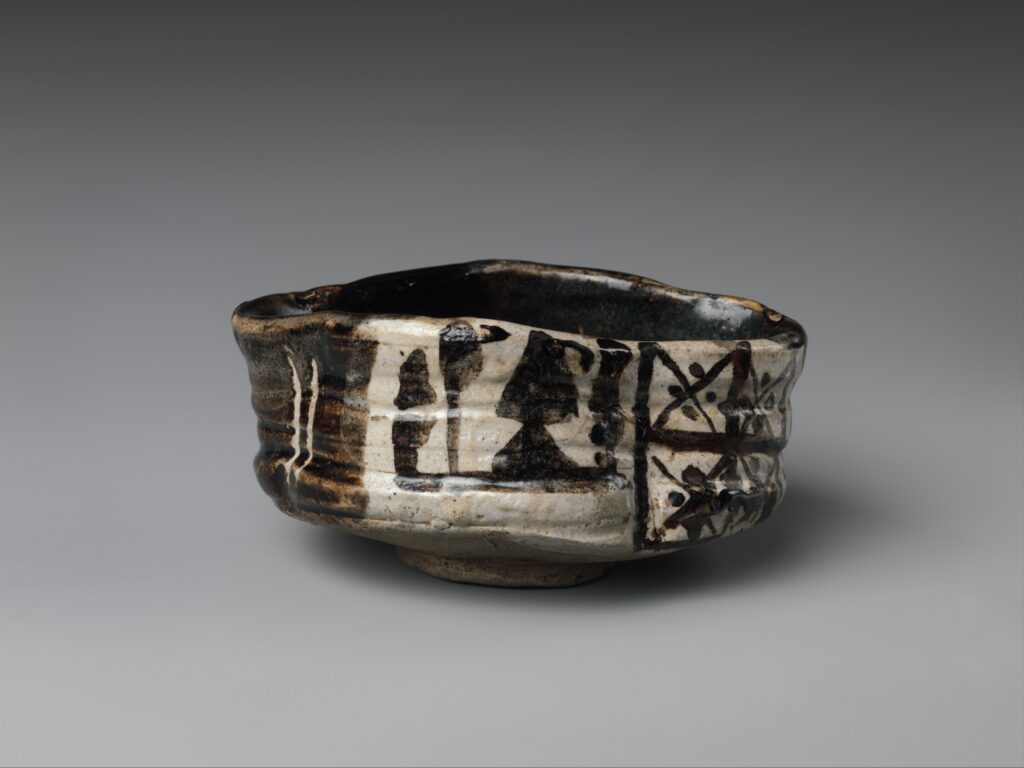
The Black Oribe chawan of the early seventeenth century takes imperfection further. The Met says its clog shape (kutsu-gata) is intentionally deformed: after the potter shaped the bowl on the wheel, he made an irregular, asymmetrical form that would fit perfectly into the tea practitioner’s palms. Plum blossoms, lines and grids were applied with quick strokes, and drippings of white slip and iron black add to the tactility of the surface (Met 2002.447.28).
What to ask before you buy a chawan
The four records suggest a short list. Is the bowl hand-molded or thrown, and is it earthenware or stoneware? Which kiln tradition does the seller place it in, Raku or Mino, and on what evidence? Is the attribution a signature, a documented link, or, as with the Met’s Chōjirō bowl, a tentative one? The Met gives heights between about 3 and 4 inches for these bowls, so comparing a seller’s dimensions with that range is a reasonable first check. For other Japanese ceramics in the journal, see Imari ware, Kutani ware and Satsuma ware, and for the wider tradition the Japanese archive.
Sources
- The Metropolitan Museum of Art, 17.118.74, Black Raku Tea Bowl
- The Metropolitan Museum of Art, 2002.447.28, Clog-shaped tea bowl (kutsu-gata chawan) with plum blossoms and geometric patterns
- The Metropolitan Museum of Art, 2015.300.272, Black Seto (Seto-guro) Tea Bowl, named Iron Mallet (Tettsui)
- The Metropolitan Museum of Art, 17.118.64, Teabowl
- The Metropolitan Museum of Art, 36.120.550, Teabowl (Tokunyu)