Victorian is the least precise word in decorating. It covers the reign of Queen Victoria, from 1837 to 1901, which is more than sixty years of rapidly changing taste, technology and wealth. A room from the 1840s and a room from the 1890s have very little in common beyond the monarch.
This guide to Victorian interior design sets out what the period actually produced, what is worth taking from it, and how to use those ideas in a house that has central heating and electric light.
The conditions that shaped the rooms
Three practical facts explain most of what we recognise as Victorian decoration.
Heating was local. A room had a fire on one wall and was cold everywhere else, so furniture gathered and textiles were heavy. Lighting was dim and dirty, first candles and oil, later gas, all of which deposited soot on every surface. And industrial production made pattern, textiles and ornament cheap for the first time, so households that had never been able to afford decoration suddenly could.
Density, darkness and pattern were not a style preference. They were the sensible response to those three conditions. How those conditions shaped daily life in the rooms is covered in how Victorian rooms were designed for living.
The wall, divided
The defining Victorian move is the horizontal division of the wall into three parts. A dado at the bottom, roughly to the height of a chair back, protected from damage and was finished in something washable or hard-wearing. The filling above it carried the main decorative treatment. A frieze ran along the top, below the cornice.
In the 1878 edition of Hints on Household Taste, Charles Eastlake gives the same recipe: a dado of plain color rising three or four feet from the floor, a light moulding above it, the patterned paper in the middle and a frieze, filled with painted ornament, just below the ceiling. He says paperhangings should never be allowed to cover the whole wall from skirting to ceiling.
The picture rail sat at the junction of filling and frieze, and existed so that pictures could be hung and rehung from hooks without putting nails into the wall.
Reinstating the full three-part wall in a modern room is usually too much. Reinstating the picture rail almost always works, and a dado in a hall or stair is genuinely practical.
Colour
Early Victorian palettes were relatively restrained. From the middle of the century, synthetic dyes and pigments made intense colours available cheaply, and interiors got much stronger: deep reds, bottle greens, ochres, browns and plum. William Perkin patented his aniline dye, mauve, in 1856.
Later in the period the Aesthetic Movement pushed in the opposite direction, toward sage green, muted gold, peacock blue and off-white, with lighter, sparser rooms.
Both are defensibly Victorian. Choosing which end of the period you are working from is the single most useful decision, because mixing the two tends to produce a room that reads as neither.
Pattern without the headache
The period used far more pattern at once than modern eyes tolerate. The workable compromise is to keep the Victorian instinct for pattern but reduce the number of simultaneous patterns from five or six to two.
- Pick one large-scale pattern and one small. Let everything else be plain texture.
- Keep all patterns within a single tonal range so they read as one family.
- Put the boldest pattern where you pass through rather than where you sit.
- Let the floor be the plainest surface, which is the reverse of period practice but necessary in a house with less furniture.
Furniture
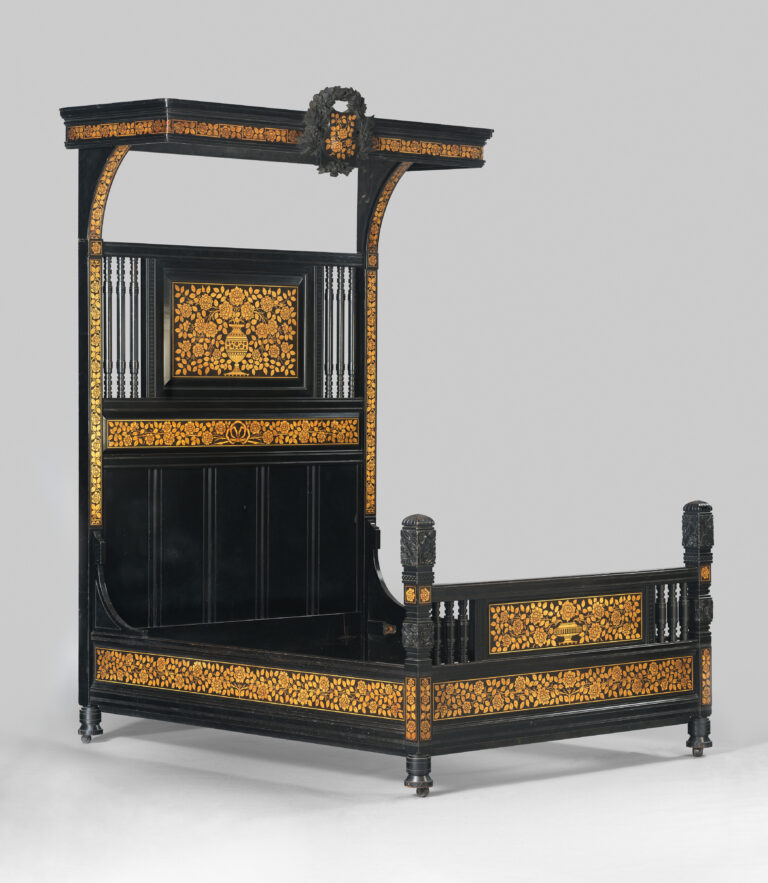
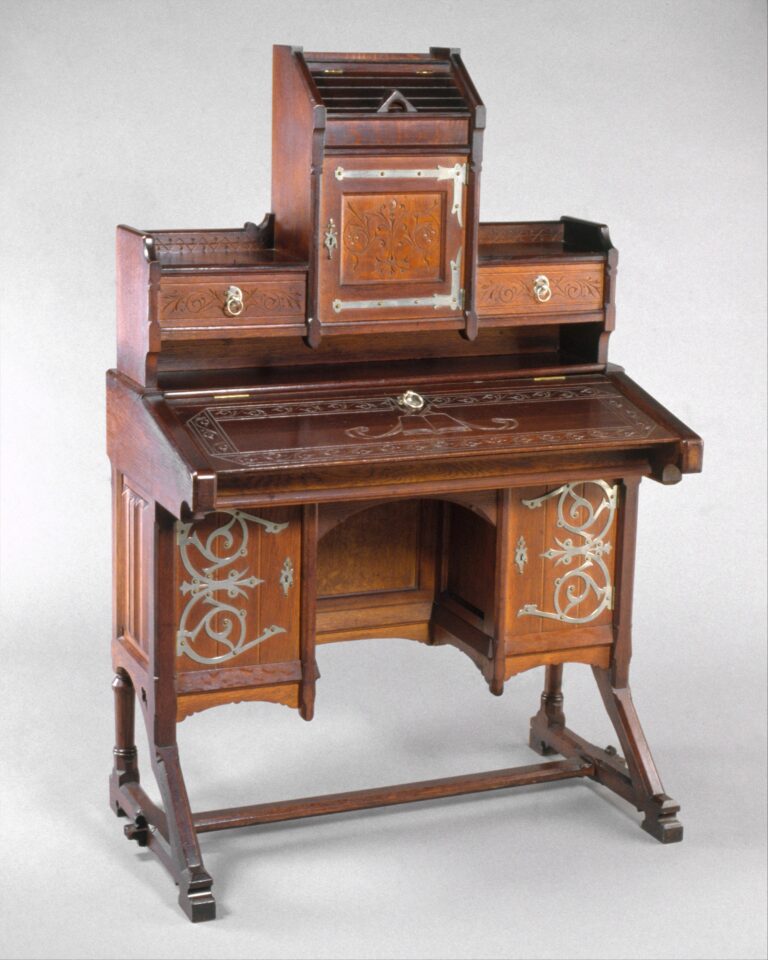
Victorian furniture is abundant and comparatively cheap, because there is a great deal of it and much of it is heavier than modern rooms want. For the styles, woods and forms in detail, see the Victorian furniture guide.
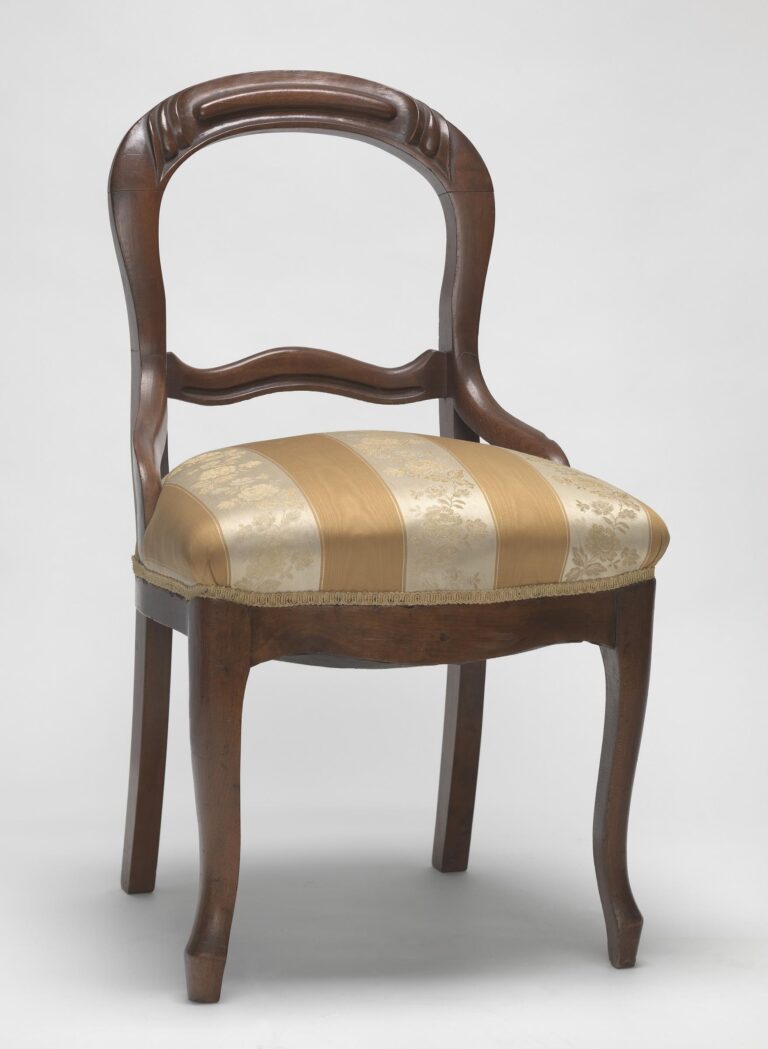
The pieces that work best now are the ones with a clear function: the chest of drawers, the washstand with a marble top, the balloon-back chair, the small occasional table, the button-back armchair. The pieces that struggle are the very large case pieces, the overmantel and the heavily carved sideboard, which need the ceiling height they were designed for.
Mahogany, walnut and rosewood dominate the earlier part of the period; oak becomes more common later, particularly under the influence of Arts and Crafts. Pine was generally painted, and stripped pine is a later fashion rather than a period one.
Victorian interior design, room by room
In a living room, group the seating and accept that it will look crowded by contemporary standards. That density is the point. If the house has a spare small room, a parlour is worth reviving.
In a bedroom, go darker rather than lighter. Victorian bedrooms were not bright, and a deep, quiet bedroom is one of the period ideas that translates most easily.
In a hall, put the pattern on the floor and the colour on the walls, and keep the furniture shallow.
In a kitchen, do not attempt a period reconstruction. Victorian kitchens were working rooms nobody would want now. Borrow the materials instead, timber, stone, brass and painted joinery, and leave the layout modern.
The commonest mistakes in Victorian interior design
Buying reproduction rather than original, when genuine Victorian furniture is frequently cheaper. Using pattern at the correct density but the wrong scale for a smaller room. Fitting bright, cool downlights into a scheme that depends entirely on warm low light. And treating the whole period as one thing.
Pick a decade, furnish toward it, and the room will hold together.