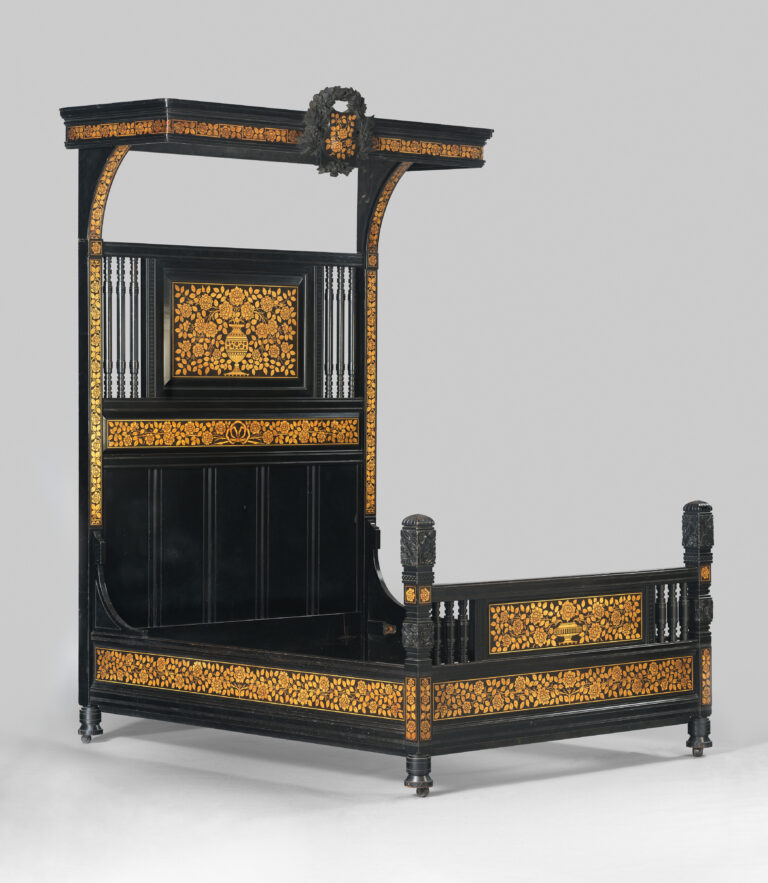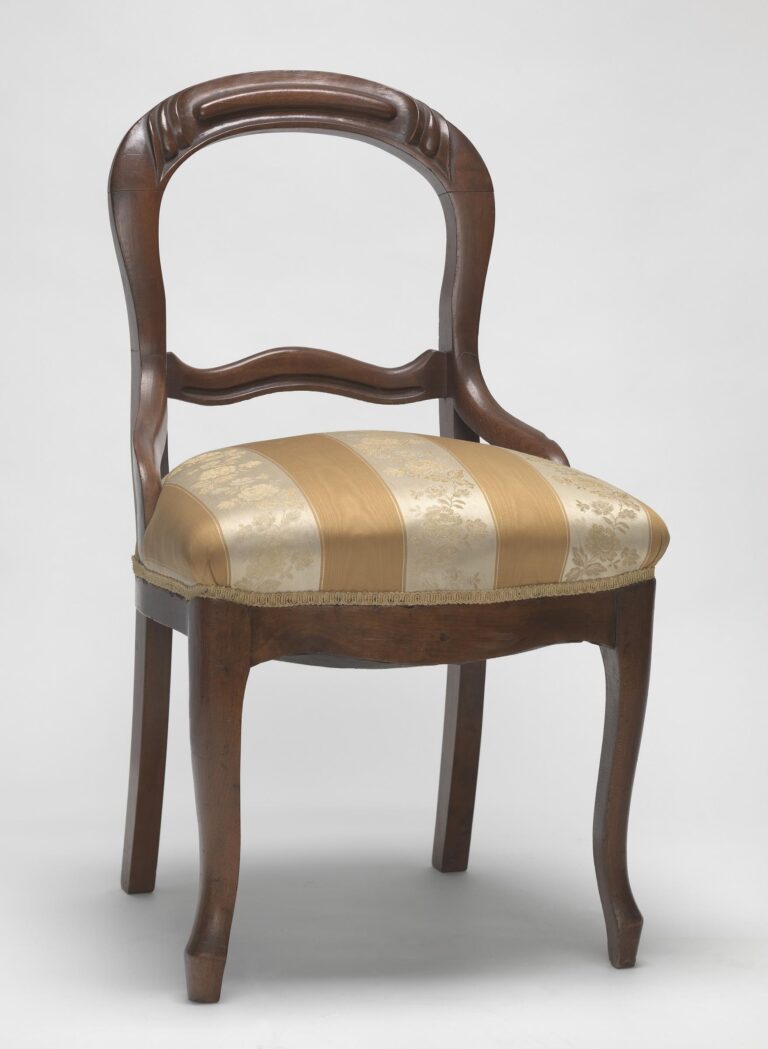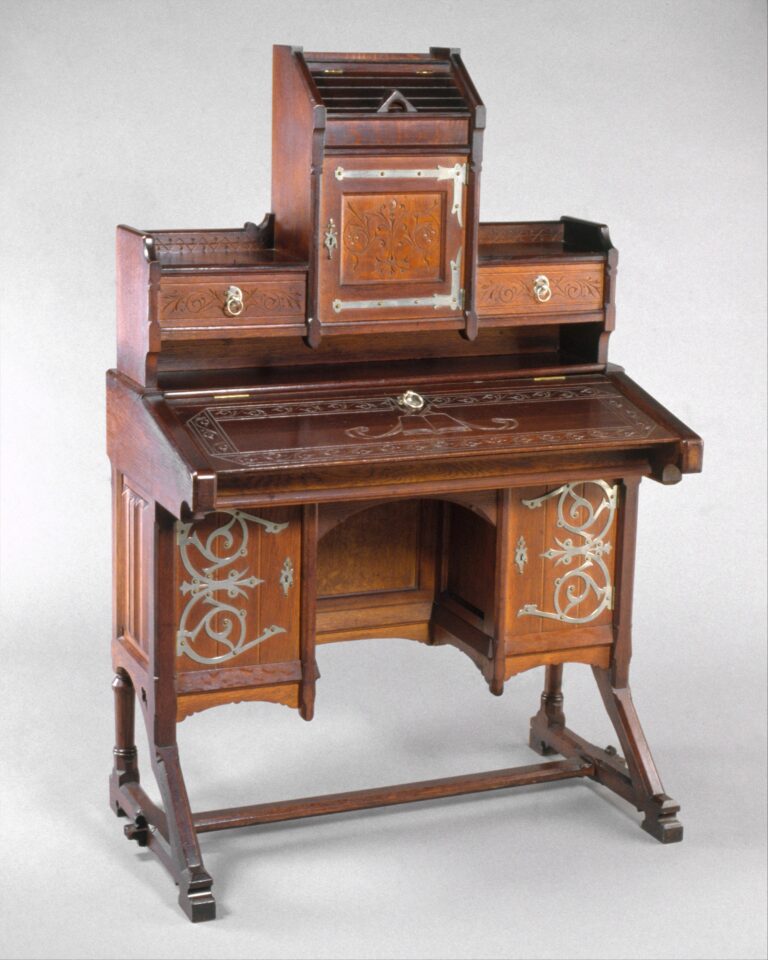
In 1840 the decorators Henry and Aaron Arrowsmith wrote that their age had “no style which can properly be called its own,” a remark the Metropolitan Museum quotes in its account of the nineteenth-century revivals. Victorian furniture is what that condition looks like in wood: the styles of earlier centuries, offered to a growing middle class with more choice than before.
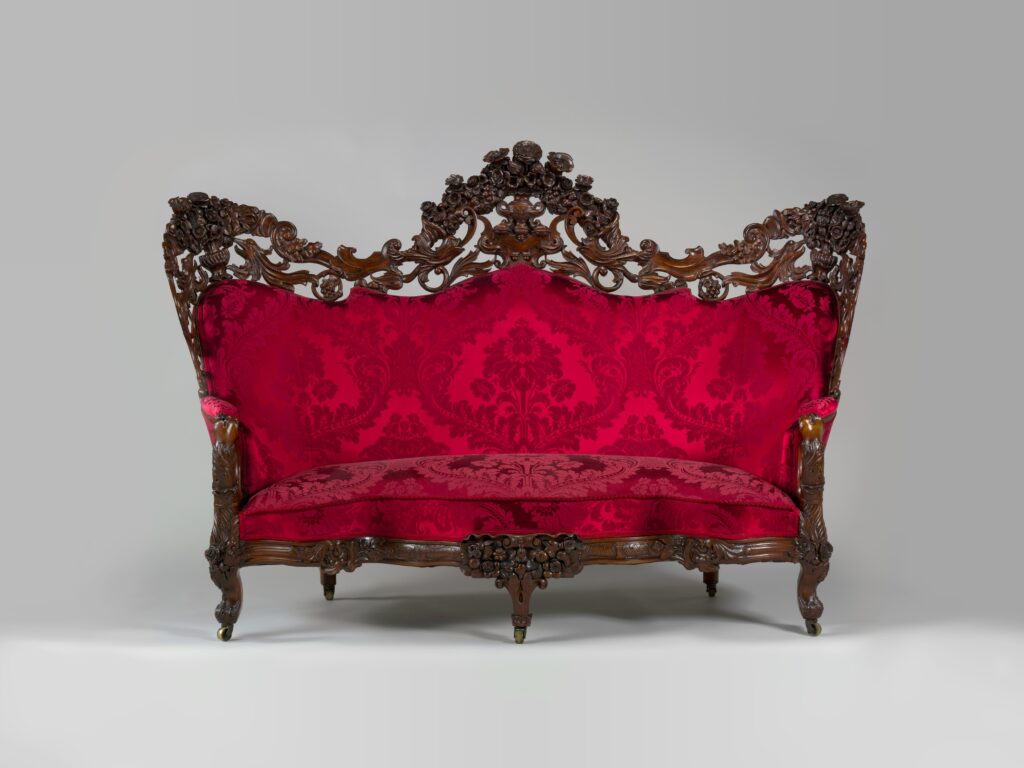
“Victorian” names a period, not a look. Merriam-Webster defines it as relating to or typical of the reign of Queen Victoria, which Britannica dates from 1837 to 1901. The furniture of those decades is a run of overlapping revivals, Gothic, Rococo, Renaissance and others, followed by a reform movement that objected to most of them. The sofa at the top of this page, American work of 1850 to 60, is one such look. Telling the looks apart is most of the work of recognizing a piece. For the rooms they furnished, see the complete guide to Victorian decor.
The main looks, briefly
- Gothic Revival: medieval motifs, favored for libraries and studies.
- Rococo Revival: the curves of Louis XV in a heavier form, made in suites for parlors and drawing rooms.
- Renaissance Revival: the air of an older lineage, wanted by the newly moneyed.
- Elizabethan and Louis XIV revivals: blocky, square suites with twisted uprights and straight turned legs.
- Louis XVI revival: round tapering legs, oval backs and deep, elaborate upholstery.
- Reform and Aesthetic work: simpler furniture with less carving, from the 1860s on.
What “Victorian” actually names
Because the label is a reign, it covers furniture of very different looks, and the looks did not start together. Britannica places a Gothic revival in the 1820s, before Victoria came to the throne, while the Met’s essay on American revival styles takes 1840 to 1876 as its span. What they share is a habit: designers looked back. The Met ties it to Romanticism and, in America, to a reaction against rapid urbanization and mechanization, and it notes that print portfolios, books and journals carried the styles to cabinetmakers, builders and general readers.
The habit had a side effect. With every earlier century to choose from, the Met observes, unrelated motifs frequently and confusingly decorated a single object.
Gothic Revival furniture
In England the Gothic revival in furniture was partly stimulated, Britannica says, by Romantic literature such as the novels of Sir Walter Scott. Britannica is unimpressed by the result: heavy medieval motifs were applied profusely and indiscriminately to every type of furniture. Nothing, it seems, was safe from a pointed arch.
The Met gives the style a loftier purpose. It became linked to national identity, with England and France each claiming the Gothic as their native style, and it was adopted as an antidote to classicism and to reinforce a religious seriousness after the Enlightenment. It was thought suitable for personal libraries and studies. Augustus Welby Northmore Pugin, a leading English proponent, is described by the Met as perhaps the first designer to argue that materials should be shown truthfully instead of disguised as something else. His philosophies of design helped shape the Arts and Crafts movement.
Very few period Gothic pieces survived into the nineteenth century, so designers took motifs from Gothic architecture and applied them to established forms. In the United States, the Met adds, Gothic Revival furniture was considered right for home libraries, and its formal high-backed chairs might also turn up in the dining room.
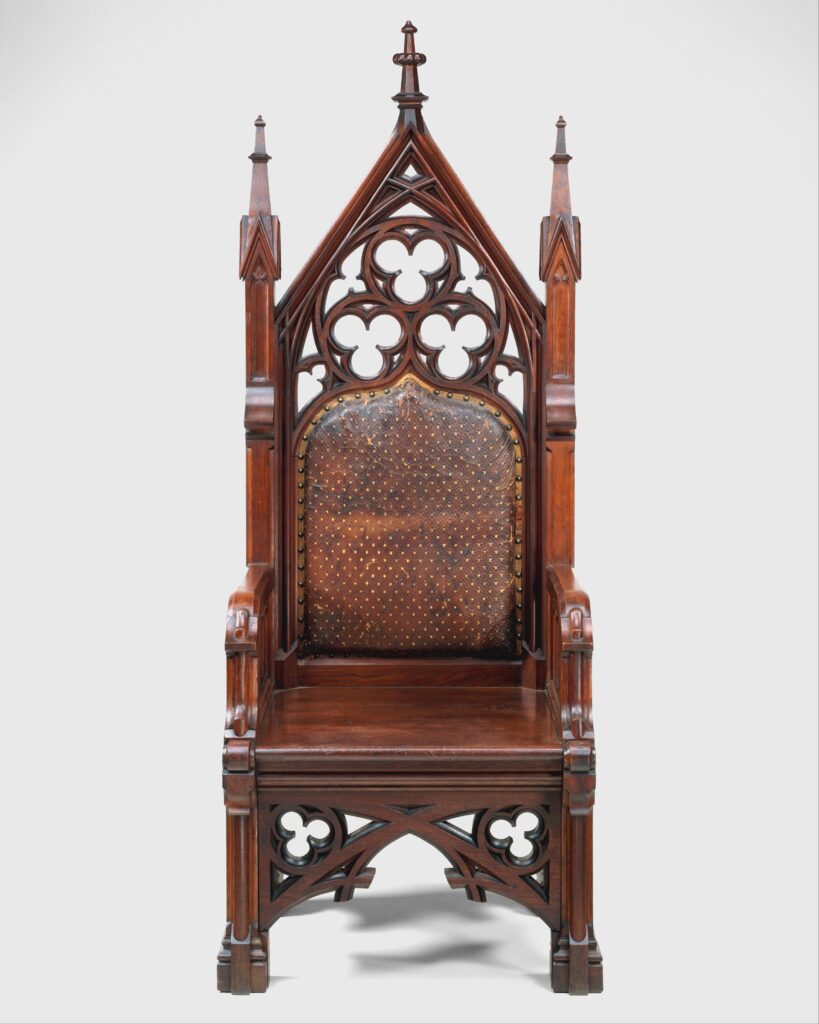
The armchair above, which the Met’s essay cites as an example of those formal high-backed chairs, is walnut with a studded leather panel under a pointed arch of trefoil tracery.
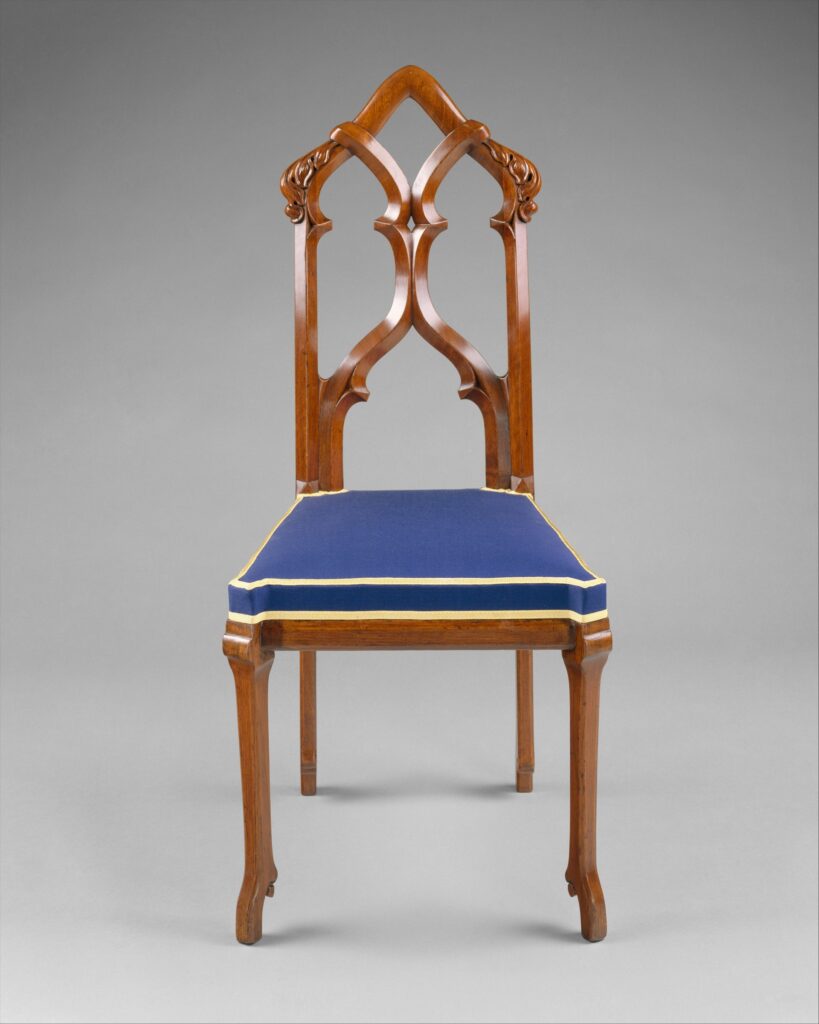
Gothic Revival did not stay in churches and castles. The Met’s side chair by Alexander Jackson Davis, made about 1857, is black walnut and just under 40 inches high, with a back of two pointed arches that cross and curl like a scrap of window tracery. It is American, a useful reminder that “Victorian” furniture was made well beyond Britain.
Rococo Revival furniture
The most popular revival borrowed the curving lines of Louis XV furniture, above all the cabriole leg, and restated them in a heavier idiom, in Britannica’s words. Entire suites were made in mahogany, rosewood and walnut, and the price depended heavily on how much carving the frame carried. The original it copied is covered in Louis XV furniture.
In the United States, the Met says, the style was limited to interiors and furniture, was thought to be elegantly French and was the most popular choice for drawing rooms and parlors, often painted white and gold. A typical suite ran to two sofas, two armchairs, four side chairs in matching silk, a center table and an étagère. The Met’s essay on European revivalism says new veneering and carving methods, coil springs, bent and laminated wood and papier-mâché had brought the style into middle-class drawing rooms and boudoirs by the second quarter of the century.
John Henry Belter, a German-born cabinetmaker who worked in America, is the name the Met attaches to the technique of laminating thin sheets of wood. Britannica puts the height of his popularity in the 1850s and calls his work mainly Louis XV revival. The sofa at the top of this page is attributed to Belter or his firm, and its crest is pierced and carved with flowers and scrolls.

Smaller pieces carried the same curves. The étagère above, the last item in the Met’s description of a parlor suite, is one the museum cites for the new materials of the period, here papier-mâché with gilding and mother-of-pearl.
Renaissance Revival and the blocky revivals
Renaissance Revival furniture traded on ancestry. Renaissance styles, the Met says, gave the air of artificial lineage that the newly moneyed wanted. The museum owns a Renaissance Revival parlor suite that furnished the music room of a Second Empire house, and it notes that the style also served in bedrooms and reception rooms.
Britannica groups two more revivals by their silhouette. Elizabethan and Louis XIV revival furniture, with the Baroque twisted upright and the straight turned leg, came in suites that were blocky and square, the opposite of the Rococo Revival’s curves. The Louis XVI style came back as well, with round tapering legs, oval backs and elaborate upholstery. The original is covered in Louis XVI furniture. Egyptian Revival, the Met adds, was probably made only as occasional pieces, and no complete suites are known.
Springs, lamination and the factory: how seating changed
Part of what separates Victorian seating from older seating is construction. Metal springs entered furniture in the first half of the nineteenth century, Britannica says, though the exact date is unknown, and they made chairs and sofas much more comfortable than the stuffing of the eighteenth century. Britannica says the upholsterer’s art reached its height in Louis XVI revival suites, with elaborate tufting, tassels and braids, on frames that could be mostly flexible metal with only the legs showing as wood.
Wood itself was shaped differently. Belter’s laminated sheets, which Britannica calls plywood, could be curved more intricately than a single piece of wood, and Michael Thonet bent solid beech with heat, in chairs that Britannica notes are still made. Machine and factory methods, in Britannica’s judgment, sometimes lowered the quality of furniture.
Victorian furniture woods and materials
Britannica names mahogany, rosewood and walnut for Rococo Revival suites. The Met’s records for the pieces on this page add detail. Belter’s sofa is rosewood and rosewood veneer with chestnut and pine as secondary woods, the Gothic armchair is walnut with leather, the reform-era chair below is ebonized and gilt wood, and the étagère combines lacquered wood and papier-mâché with mother-of-pearl. For the late 1870s and 1880s the Met adds a new fashion, “honest” Modern Gothic oak furniture, favored by Americans who wanted to be thought artistic.
The reform: from the Great Exhibition to Eastlake
The Victorians were also their own harshest critics. A parliamentary committee reported in 1836 that British goods lagged behind those of France, Germany and the United States, and the Government Schools of Design were founded in 1837. The Met says criticism sharpened after the 1851 Great Exhibition in London, where the display of domestic furnishings was, in its word, abysmal. Henry Cole, Richard Redgrave and Owen Jones, with the support of Prince Albert, set out principles: decoration is secondary to form, and form is dictated by function and the materials used.
Health pushed the same way. The Met points to the recent discovery of germs, to cholera epidemics, to bedbugs in wooden bedsteads and to industrial soot. Charles Locke Eastlake’s Hints on Household Taste, first published in England in 1868 and in America in 1872, objected to ornately carved furniture that could trap dust and dirt. He called for a simpler style based on Renaissance and Gothic Revivals, with incised decoration that was easier to clean. His name became attached to a style of furniture, covered in Eastlake furniture, although, the Met notes, he also recommended strategies for a dust-free, more sanitary home.
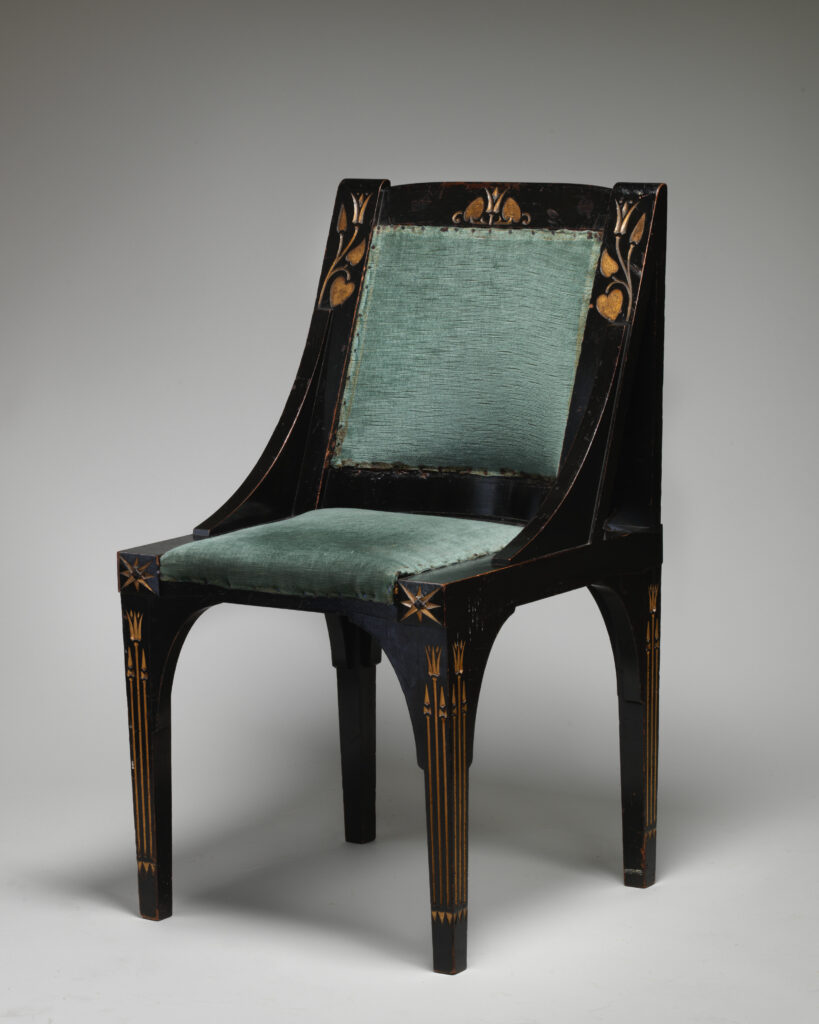
The Met cites the chair above, made by Chubb & Sons after a design by Christopher Dresser about 1870, at the point in its essay about that incised decoration. From the 1860s the Aesthetic movement went further and rejected revivalism outright. The Met describes Edward William Godwin deploring “fluff and dust” and designing furniture without excessive carving that could be moved easily for cleaning, with the arts of Japan an influence, and Britannica names Godwin and Dresser as the chief exponents of the aesthetic style in England.
The Met’s verdict on the reformers is dry. The movement never completely achieved its goals, and instead of refining the plethora of styles it created more of them for the consumer to choose from.
Victorian living room furniture: what filled the parlor
Searches for Victorian living room furniture usually mean the parlor or drawing room, and the sources above describe how those rooms were furnished. The Met says the Rococo Revival was the most popular choice for American drawing rooms and parlors, often painted white and gold. A typical suite ran to two sofas, two armchairs, four side chairs in matching silk, a center table and an étagère. The Met also owns a Renaissance Revival parlor suite that furnished the music room of a Second Empire house.
Because parlors were furnished in suites, a single sofa or chair you meet today may once have belonged to a set. The guide to Victorian sofas, settees and fainting couches looks at that for seating, and the guide to antique lamps covers the oil lamps that lit such rooms.
Victorian furniture characteristics, and how to read a piece
Start with the look, not the date. Ask which revival a piece belongs to, and whether it is the original style or a restatement of it. Britannica’s description of the Rococo Revival as Louis XV in a heavier idiom is the clearest warning that a curved, carved piece may be Victorian rather than eighteenth century.
Several features recur in the sources. Gothic pieces apply motifs borrowed from architecture to familiar forms. Rococo Revival suites carry carving across the frame, with price tied to how much. Upholstered seating combines springs with elaborate tufting, and some pieces use laminated or bent wood. Parlors were furnished in suites, so a single chair or sofa may once have belonged to a set, a point the Victorian settee guide takes up for sofas.
Expect a wide range of quality. The Met says any style could be bought at several consumer levels, from exceptionally well made pieces intended for heads of state and international exhibitions to poorly made wares for the less affluent. A piece that mixes unrelated motifs is therefore not necessarily a later alteration. The period itself was eclectic, and the Met says taste grew still more so after the 1870s.
When you are looking at antique Victorian furniture in a shop or a sale room, the checks that apply to any older piece apply here too, and buying vintage furniture covers them. How these pieces were arranged and lived with is the subject of how Victorian rooms were designed for living, and more of the period is collected under Victorian in the style archive.
The useful question is rarely whether a piece is Victorian. It is which Victorian look it belongs to, and at which price level it was made. The chairs of the period have their own guide: Victorian chairs.
Sources
- The Metropolitan Museum of Art, American Revival Styles, 1840–76
- The Metropolitan Museum of Art, European Revivalism
- The Metropolitan Museum of Art, Design Reform
- Encyclopaedia Britannica, Furniture: 18th century, the Neoclassical style (the 19th-century section)
- Encyclopaedia Britannica, Victoria
- Merriam-Webster, Victorian
- The Metropolitan Museum of Art collection records: 1999.396, 1986.204, 1999.50.2 and 1994.529